
Agent Design: Long‑running Agents, Context Compression and Skills
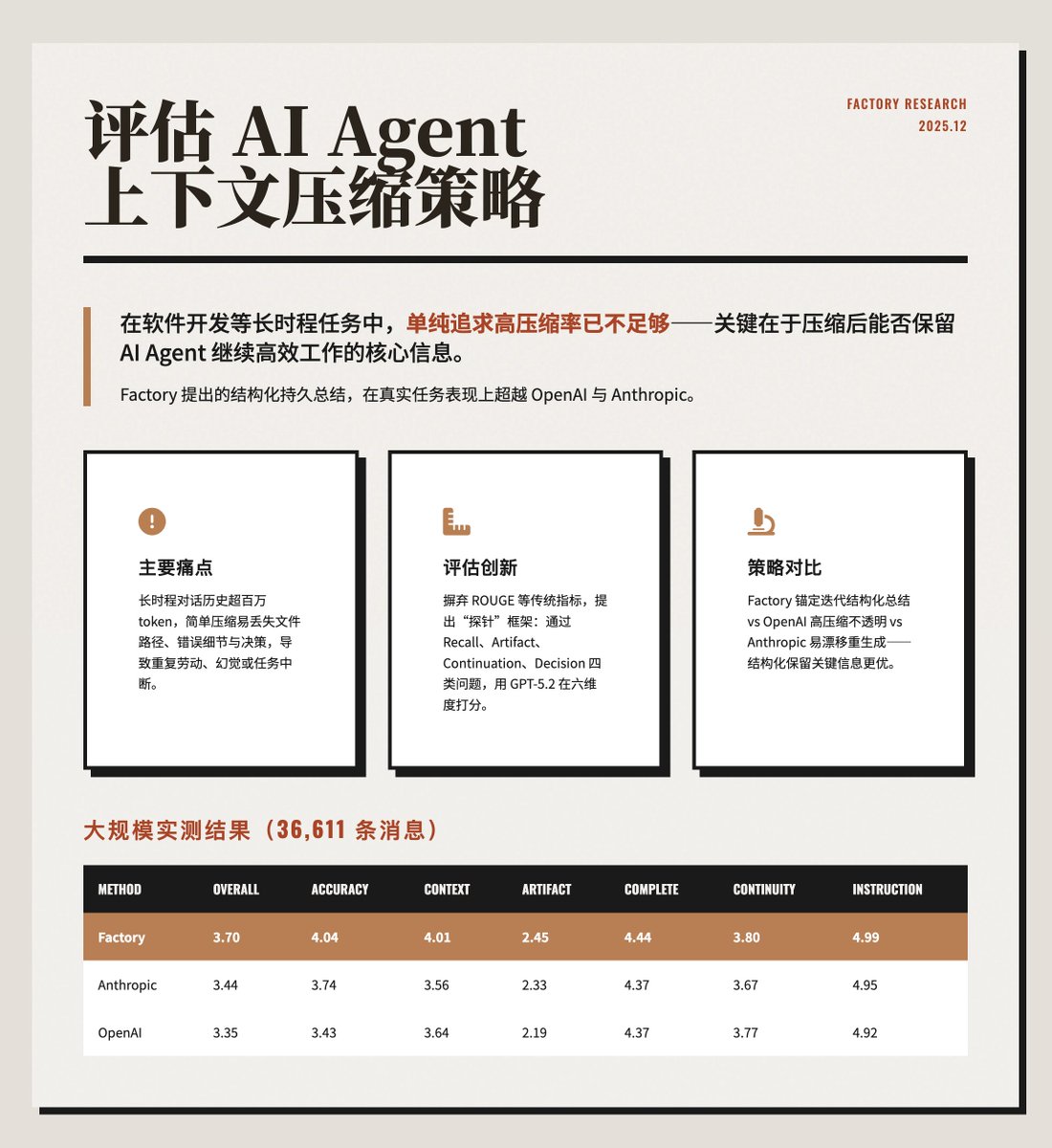
Agent products prioritize long‑running context, structure and tool integration. - Manus built a cloud‑resident agent to own environment context, avoiding local browser conflicts - Manus avoids training base models, instead orchestrates best models per task - Long agents consume high inference tokens; gated rollout and invite control manage capacity - Effective context compression preserves actionable details, not only high compression rates - FactoryAI anchored iterative summaries outperform blind high compression approaches - Claude 'skills' are prompt‑driven meta‑tools that inject structured instructions at runtime - Claude skills include YAML metadata, allowed tools, model override and detailed step guides - Advanced tool use patterns enable on‑demand tool discovery, programmatic calls and examples - Agents benefit from proactive behavior, observation‑reflection cycles and recovery ability
Key insights
Cloud‑resident agents preserve context and avoid local UX conflicts
Manus moved from a local browser agent prototype to a cloud‑resident 'browser in the air' model: the agent runs in a persistent cloud VM, retains continuous context, and avoids interfering with users' local UI and device state. This design enables 24/7 agent activity, richer environment capture, and separation of user device interaction from agent operations, addressing usability and continuity issues seen in local agent prototypes.
Application teams should orchestrate best‑of‑breed models rather than bet on a single base model
Manus intentionally declined to train its own base model to avoid product iteration lock‑in tied to model checkpoints. Instead it uses multiple top provider models per capability (e.g., coding versus multimodal) and negotiates as a large consumer for provider optimizations, preserving flexibility and capturing diverse strengths while focusing product investment on orchestration, tooling and UI.
Context compression must be task‑aware and preserve actionable artifacts
Research comparing compression strategies shows that extreme compression rates can drop critical low‑entropy details such as file paths or error messages. FactoryAI's anchored iterative structured summaries maintain intent, file changes, decisions and next steps and outperform naive high‑compression methods in agent continuity tasks, reducing repeat work and hallucinations.
Skill systems change agent extensibility via prompt‑driven modules
Claude's skill system injects structured SKILL.md content (YAML metadata + instruction body) into the conversation at runtime, dynamically switching Claude into domain experts without executing external code. Skills declare allowed tools, models, and execution constraints, enabling hot‑updateable capabilities, precise permissioning and safer complex workflows via higher‑priority contextual instructions.
Advanced tool use reduces token costs and scales to large toolsets
Anthropic's advanced tool patterns—on‑demand tool search, programmatic tool calling and tool use examples—enable agents to handle hundreds to thousands of tools without preloading all definitions, cutting token consumption and improving accuracy. Delayed loading and code orchestration reduce context bloat and make large tool inventories tractable for long‑running agents.
Agent robustness requires interruptibility, recovery and proactiveness
Agents must support mid‑task user updates, be interruptible and recover from execution errors by self‑diagnosis and plan B attempts. Manus and compression research emphasize agents that observe, reflect and act in cycles rather than 'vacuum' long planning, enabling better error recovery and continuous alignment with changing user intent.