
AI Agent Engineering and Code Quality Best Practices
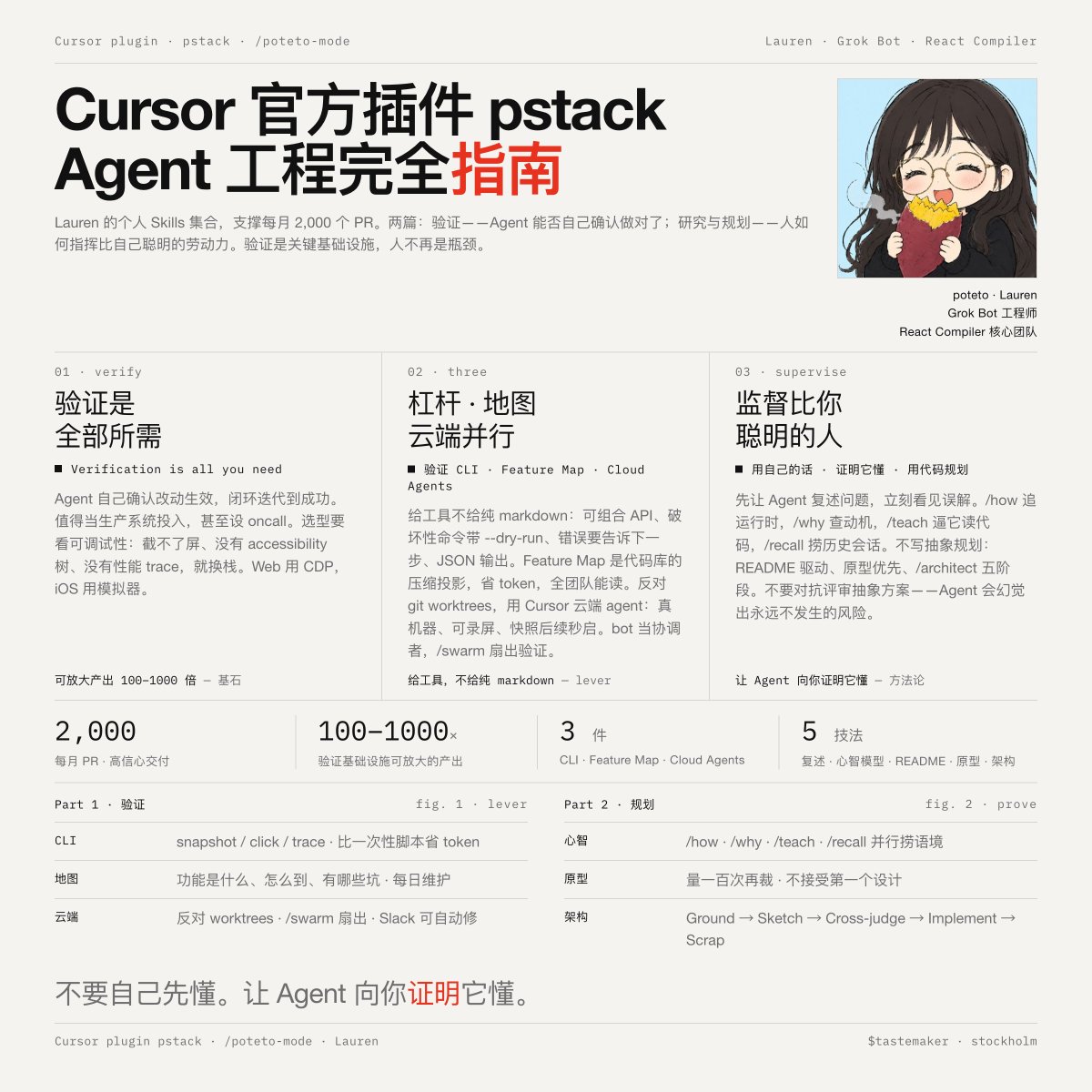
The AI engineering community is actively discussing best practices for maintaining code quality when AI agents generate large volumes of code. Key topics include verification-first approaches, breaking down migrations into small testable PRs, and using visual regression tests. The community emphasizes that AI agents should be treated as execution entities, with humans defining problems and accepting results, rather than integrating AI into existing workflows.
Key insights
A guide from Cursor's pstack plugin emphasizes that verification is essential for AI-generated code. It recommends splitting multi-PR migrations into small, verifiable PRs, each with visual regression tests and real-device verification, requiring results to match the original 100%, including bugs. This approach ensures code quality and reduces risks in AI-driven development.
The community discusses the challenges of ensuring software engineering quality when AI agents write code at scale. The discussion highlights the need for structured processes and tools to manage AI-generated code, including verification and testing strategies. The focus is on maintaining reliability and consistency in codebases increasingly produced by AI.
An AI-native approach is defined as one where AI agents are the primary execution entities, with humans responsible for defining problems and accepting results. This contrasts with merely adding AI to existing processes. The distinction is crucial for companies aiming to fully leverage AI capabilities in their workflows.