
AI economic & societal impacts
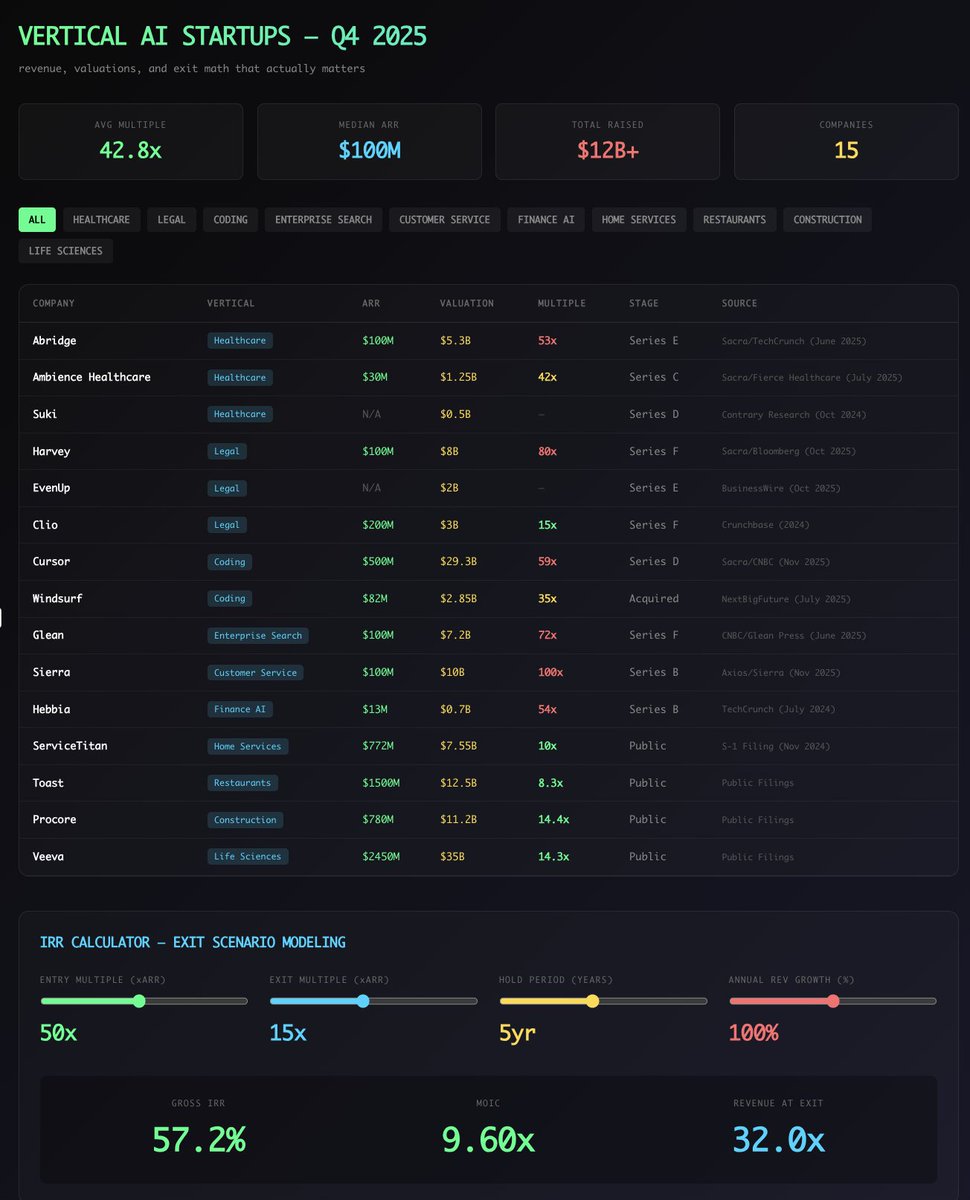
Multiple posts analyze AI's economic and societal impacts, valuations, and systemic risks. - AI will shift scarcity from human time to agents' compute and knowhow. - Value will concentrate among those providing knowhow to AI and high-return agents. - AI may reduce opportunities for humans to acquire knowhow, limiting skill mobility. - Vertical AI valuations reach 50–100x ARR, outperforming traditional SaaS multiples. - Structural societal risks: generational wealth shifts, stagnating mobility, and potential political instability cycles. - U.S. national security policy analysis notes strategic shifts in intervention, alliance focus, and industry protection of AI/quantum/biotech. - Learning patterns change: AI lowers imitation baseline and alters human practice opportunities.
Key insights
AI re-centers scarcity from human time to compute and knowhow
One analysis asserts that the emergent scarcity in AI economies is compute and agent capacity, not human time. Monetary value will attach to knowhow that improves agent performance. As compute becomes the limiting input, top agents and those who provide high-value knowhow will concentrate wealth and influence, while most human time may lose marginal economic value unless it contributes unique knowhow.
AI could reduce human learning opportunities and skill mobility
The same analysis argues that as humans increasingly rely on AI, AI both benefits from human knowhow and captures the learning opportunities that would let novices become experts. This dynamic can make upward mobility into expertise more difficult, as learners depend on AI instead of undergoing traditional skill acquisition cycles.
Investors value vertical AI highly, increasing risk concentration
Vertical AI companies are reported to trade at 50–100x ARR, 4–5x higher than listed SaaS multiples, reflecting investor bets on category dominance and winner-takes-most outcomes. The report notes high valuation returns hinge on sustained hypergrowth and the ability to become the category champion, otherwise returns can fall sharply.
Structural societal risks: generational debt and cyclical instability
A broader socio-political thread links extended lifespans, population changes, and generational debt dynamics to reduced social mobility, rising youth relative poverty, political polarization, and potential cycles of conflict or systemic resets. The post frames these as structural contradictions that could be exacerbated by uneven technological gains.
Security policy shifts aim to protect technological leadership
A policy analysis lists U.S. national security priorities including clearer strategic goals, higher intervention thresholds, emphasis on Western hemispheric dominance, investment in AI/biomed/quantum/space/nuclear, and pressure for allied defense spending—framed as a move to preserve economic and technological advantage.