
Claude Opus 5.5 Release: Performance and Cost Analysis
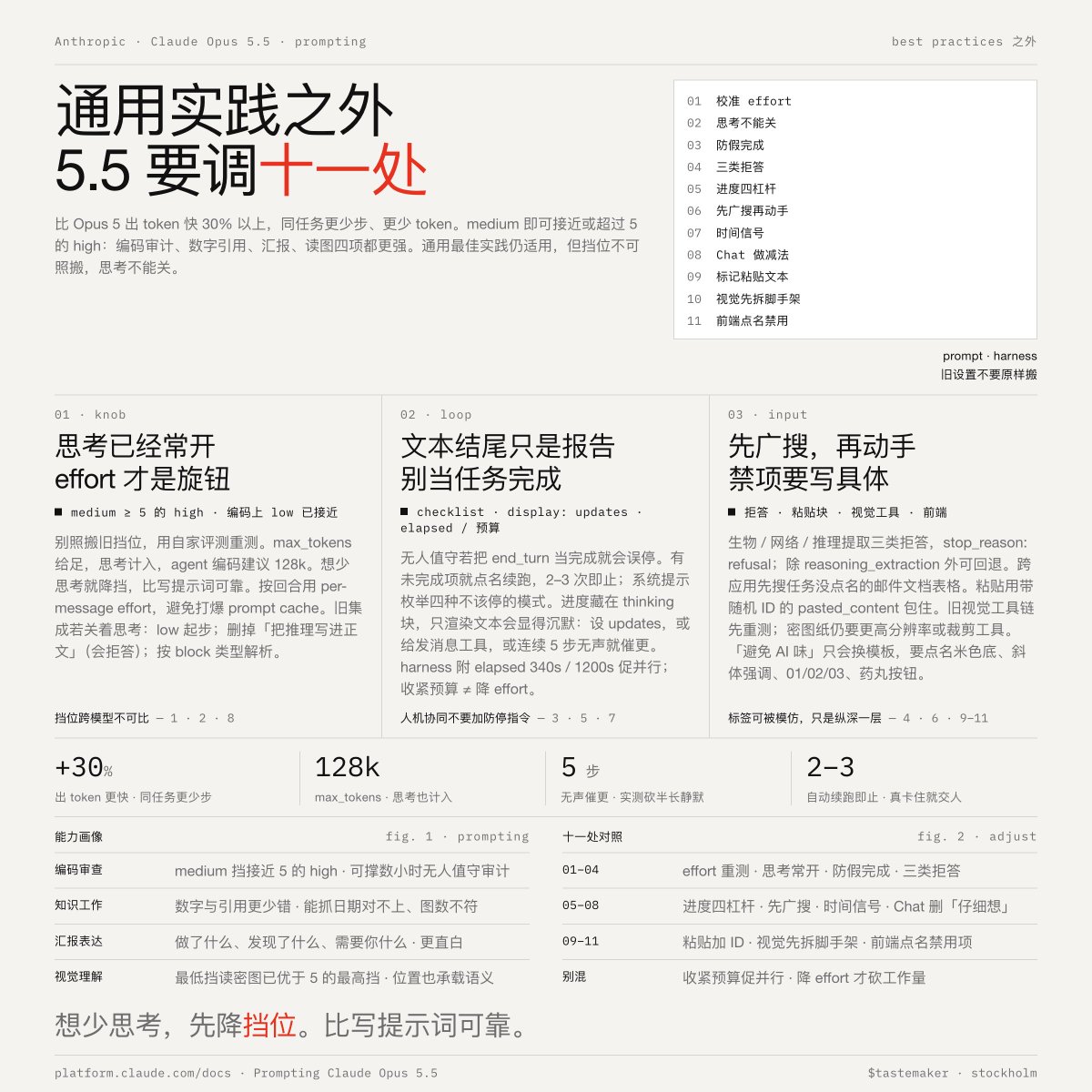
Anthropic released Claude Opus 5.5 on September 22, 2026, achieving performance close to the larger Fable 5.1 while costing 40% less than Opus 5. The model costs $4 per million input tokens and $20 per million output tokens, with cache reads reduced by 60%.
Key insights
Significant Cost and Speed Improvements
Claude Opus 5.5 offers input and output token prices of $4 and $20 per million tokens, a 20% reduction from Opus 5. Cache read costs dropped from $0.50 to $0.20, a 60% decrease benefiting developers running agents. Output speed is also over 30% faster. In a real-world test, the model audited and fixed a 200,000-line codebase in under 3 hours, a task that took Opus 5 over 20 hours with 2.5x the token usage. Against GPT-6 Astra, Opus 5.5 scored equally on Terminal-Bench 4.0 while costing about 40% as much.
Enhanced Knowledge Work and Communication
Opus 5.5 showed significant accuracy improvements in knowledge work. In a test where models were required to write a company earnings report using only online sources, Opus 5.5 passed 16 out of 18 attempts while Fable 5.1 and Opus 5 passed none. Its communication style has also been refined to put the most important conclusions first, reducing jargon and better following user instructions.
New Safety Measures and Access Restrictions
Due to its capabilities approaching those of the Mythos-level model in cybersecurity and biology, Opus 5.5 inherits Fable 5.1's safety guardrails. Most cybersecurity tasks are automatically routed to the older Opus 4.8, and biology-related work requires a special application for the Life Sciences Verification Program. A verification channel for security professionals will open in the coming weeks. The model's ability to 'think' cannot be disabled, and API accounts created after August 31, 2026 will face restrictions on extracting model reasoning to prevent distillation attacks.
Prompt Engineering and Harness Adjustments Needed
Users transitioning to Opus 5.5 must adjust their prompt strategies. Key changes include calibrating the 'effort' parameter, as even the 'low' setting can match Opus 5's 'high' in coding. The 'thinking' mode is permanently enabled. For agentic tasks, new prompts are needed to prevent false completion signals, as the model may end a turn with a progress report that doesn't indicate task finality. A new 'preserved thinking' mechanism prevents unauthorized extraction of the model's reasoning chain.
Competitive Launch Amidst a Wave of New Models
Claude Opus 5.5 was launched on the same day as OpenAI's GPT-6 Sol and GPT-6 Luna, along with Xiaomi's MiMo V2.6, Grok 4.7, and Step 5 preview. Despite the crowded launch day, Anthropic's focus on agentic coding, computer use, and knowledge work distinguishes Opus 5.5. An overall benchmark comparison was not immediately available, as the close release dates prevented cross-model testing.