
Claude Opus 5.5 Released with Cost Reduction and Enhanced Capabilities
Anthropic released Claude Opus 5.5, matching Fable 5.1 on most work tasks while costing 40% less than Opus 5. Prices: $4/$20 per million input/output tokens, cache reads down to $0.20, output 30% faster. A test audit and fix of a 200,000-line codebase was completed in under 3 hours, versus 20+ hours for Opus 5.
Key insights
Cost Reduction: Price and Token Efficiency
Opus 5.5's 40% cost reduction comes from both lower unit prices and fewer tokens per task. Input is $4 per million tokens, output $20, each 20% cheaper than Opus 5. Cache read dropped from $0.50 to $0.20 — the biggest cut, particularly relevant for developers running agents that repeatedly read the same context. Output speed increased by over 30%. An average session costs about 31% less: Anthropic testing on 44 customer service tickets from Opus 4.8 to Opus 5.5 showed an 18% cost drop, and a prompt review brought it down 25% overall.
Performance: Large Codebase Audit in 3 Hours
A tester used Opus 5.5 to audit and fix a 200,000-line codebase in under 3 hours; Opus 5 took over 20 hours and used 2.5x more tokens. Internally, Anthropic had Opus 5.5 and Fable 5.1 rewrite HAProxy from C to Rust: both passed nearly all regression tests, Opus 5.5 in 9.5 hours at 51% lower cost versus Fable 5.1's 12 hours. On Terminal-Bench 4.0, Opus 5.5 scored equal to GPT-6 Astra at about 40% of the cost. In a research test requiring models to write a quarterly earnings report using only web search with no fabricated numbers or quotes, 16 of Opus 5.5's 18 reports passed, while Fable 5.1 and Opus 5 passed zero.
LEGO Microduck: Real-World Assembly Verification
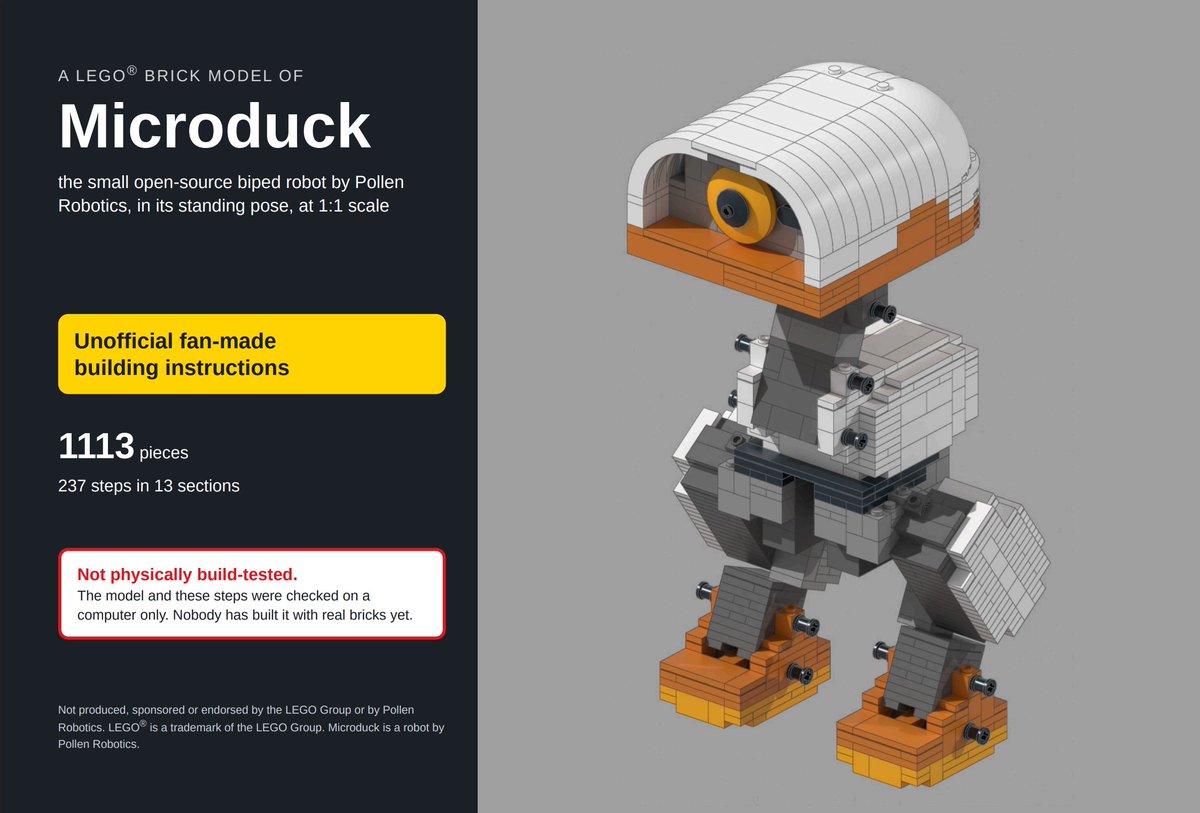
HuggingFace team member Victor Mustar tested Opus 5.5 by asking it to design a Microduck buildable with real LEGO bricks. Opus 5.5 produced a design using 1,113 real LEGO parts in 6 colors at 1:1 original scale. All 3,204 connections matched in 3D with zero collisions, and each step's new parts inserted along assembly directions without intersecting existing parts. Estimated center of mass fell within the two-feet support range. It delivered a 141-page, 237-step, 13-chapter official-style build manual, plus LDraw model files, CSV part list, and BrickLink XML with browser-based price checks.
Prompt and Harness Adjustments: 11 Official Directions
Anthropic published an official guide with 11 adjustment directions for Opus 5.5: calibrate effort levels (medium in 5.5 ≥ high in Opus 5, low is close to 5's high on coding), note that disabled thinking mode is no longer supported, prevent 'false completion' in unattended tasks by using checklist tracking, categorize safety refusals (bio, cyber, reasoning extraction), set display: 'updates' for progress visibility, instruct broad exploration before acting, use time signals for parallel execution, trim 'think carefully' prompts in chat, mark pasted content with random IDs, re-test vision tool chains, and be specific about anti-AI-style design rules.
Design Philosophy: Specifications Over Templates
A developer noted that giving Opus 5.5 design specifications rather than templates yields better results. A PPT made without templates but based on Adobe's Design System worked well. Skills may not even be needed for video work — providing TTS tools, drawing tools, ffmpeg, and a browser was sufficient. The philosophy: 'templates are expert shortcuts; specifications plus model capability is the bitter lesson — general methods defeat expert shortcuts. Each model upgrade makes products stronger without code changes.'
Cache and Billing Practical Tips
Practical cost management tips: use /clear when switching to unrelated tasks, /compact before cache expiry to preserve context. Subscriber cache expires in 1 hour; API cache expires in 5 minutes — a 120K token context jumps from $0.02 to $0.60 after 6 minutes. Cache only reuses the exact prefix of the previous turn; switching models, connecting MCP servers, or enabling quick mode invalidates it. Subscriber limits go 25% further at new prices due to the cost reduction.