
Context Graphs — capturing decisions and organizational memory
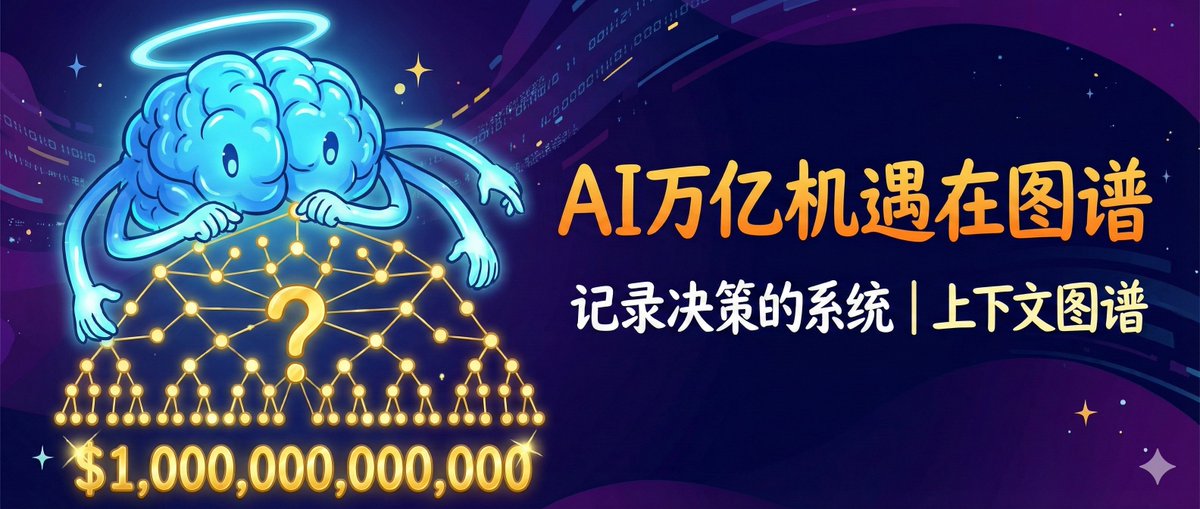
Context Graphs as a new layer to record AI decision rationales and trajectories. - Current systems record facts but not decision reasons. - Context Graph records 'why' and the reasoning chain for decisions. - Example: record complaint → policy rule → manager approval → discount. - Context Graph needs event clocks, not just state clocks. - Missing event clocks lose decision rationale like 'why timeout changed'. - Agents generate trajectories by accessing systems and APIs during tasks. - Trajectories are used like guided random walks to learn organization ontology. - No fixed schema; ontology emerges from agent usage patterns. - Accumulated trajectories become an organizational world model. - World models enable simulation and counterfactual reasoning for decisions. - PlayerZero uses production incident trajectories to predict impacts of code changes.
Key insights
Context Graphs capture reasons, not just facts
Context Graphs are defined to record the reasoning and decision traces behind actions, not only the result states. Current enterprise systems record state (e.g., customer purchase amounts) but not the sequence of policies, approvals, or prior events that produced the result. Context Graphs aim to persist the 'why' for future AI reasoning and reliable decision replication.
Construct context graphs via agent trajectories and emergent ontologies
Rather than predefining schemas, context graphs can be built from guided agent trajectories: as agents access APIs and systems to solve tasks, their traversal patterns reveal emergent entities and relationships. Frequent co-occurrence and path similarity define important ontology elements without manual schema design.
Accumulated context graphs become organizational world models
With sufficient trajectories, a context graph transitions from a retrieval layer to a world model that encodes decision propagation, exception handling, and causal effects, supporting simulation and counterfactual reasoning such as predicting the impact of code changes on production incidents.