
DeepSeek V3.2 Technical Breakthrough & User Lock‑in
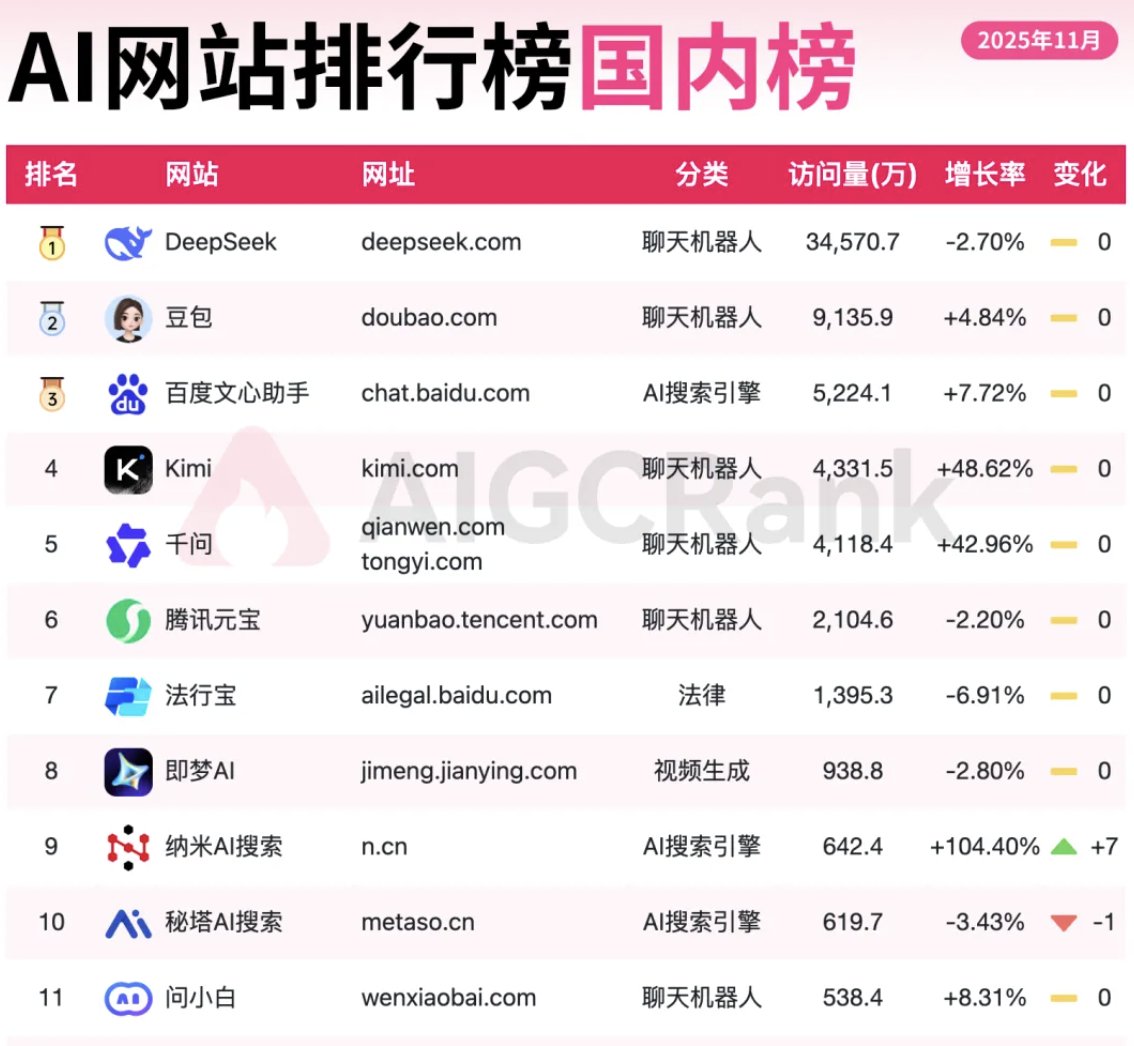
DeepSeek releases V3.2 with architectural and market effects.
Key insights
DeepSeek‑V3.2 introduces DSA sparse attention
DeepSeek‑V3.2 includes a core architecture innovation called DeepSeek Sparse Attention (DSA). DSA reduces computation for long text by focusing on key segments instead of scanning all tokens, lowering complexity from exponential/geometric growth to near‑linear while preserving understanding accuracy. The report attributes major inference speed and cost improvements to DSA. (supported by technical report observations and claimed compute reductions).
Training pipeline uses expert models and large RL distillation
The V3.2 training strategy first produced specialized expert models for domains such as mathematics, programming, and logic, then performed knowledge distillation and large‑scale reinforcement learning to transfer expert skills to the general DeepSeek model. The pipeline emphasizes expert differentiation, distillation of high‑quality expert outputs, and RL to improve reasoning and problem solving.
Agent capability improved via synthetic task environments
DeepSeek trained agents on more than 1,800 synthetic complex task scenarios covering tool use, software manipulation, and multi‑step workflows. The model underwent iterative trial‑and‑feedback reinforcement in these simulated environments to enhance real‑world tool use and instruction following, improving robustness on practical agent tasks.
Performance claims: parity or advantage against leading closed models
The technical report claims DeepSeek‑V3.2 matches or exceeds contemporaneous closed‑source models in reasoning and agent benchmarks, citing parity with Gemini‑3.0‑Pro on several tests and outperforming GPT‑5 on some complex tasks. It also reports gold‑level performance at IMO and IOI math/informatics benchmarks, presented as evidence of hard‑science capability.
User retention driven by a 'Cinderella Glass Slipper' lock‑in
Analysis labels a psychological lock‑in as the 'Cinderella Glass Slipper Effect': users who first encounter a model that perfectly solves a high‑value need form strong, lasting attachment. OpenRouter analysis of billions of calls reportedly shows early 'fit' users become foundational cohorts who resist migrating even to higher‑performing later models. The effect emphasizes experience fit, persona stability, and workflow binding over raw model benchmark performance.