
Development and Product Comparison of AI Voice Input / Voice OS
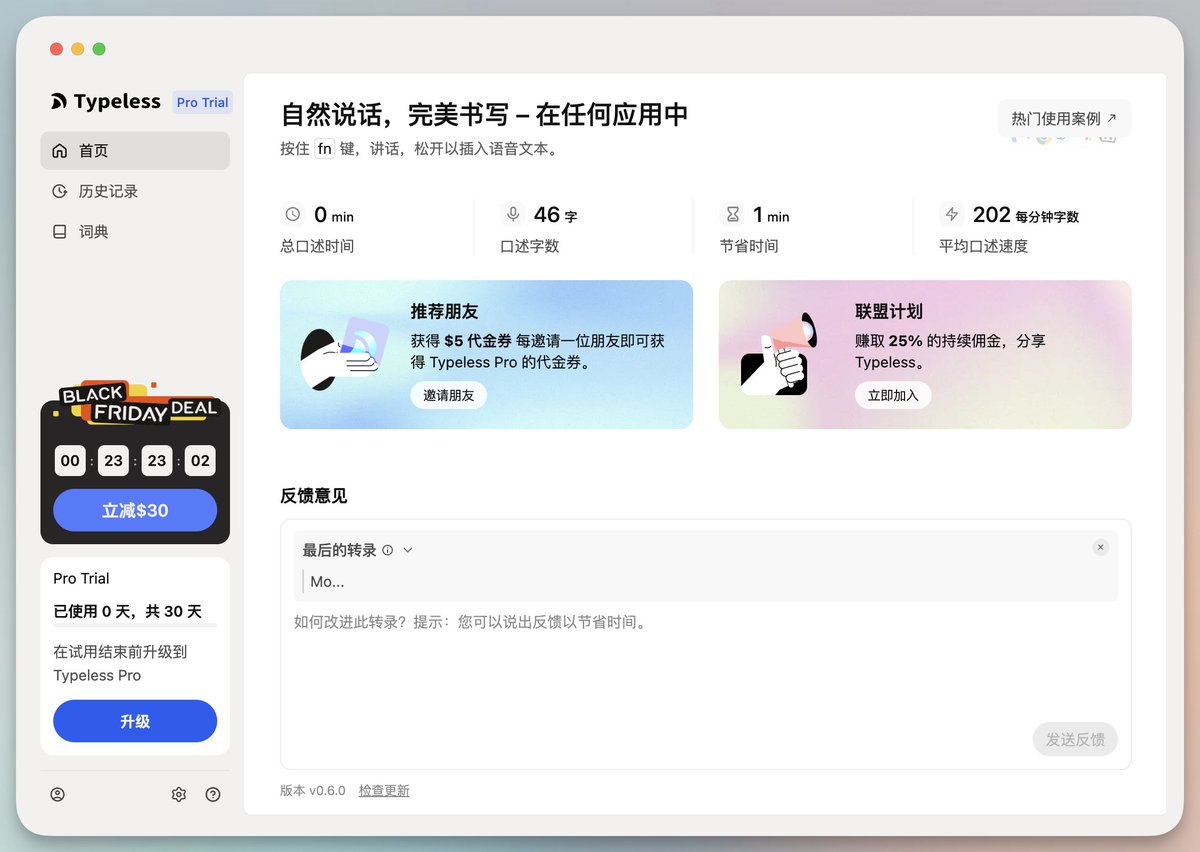
Multiple companies are competing to advance voice input, but there are differences in their paths and strategies. - Silicon Valley companies (such as Typeless and Whispr flow) aim to build a voice OS, positioning voice as the entry point for operating systems. - WeChat and Doubao focus on cross-app experiences on mobile, with Doubao collaborating with ZTE on system integration. - Zhizhu adopts a pragmatic approach, treating input methods as entry points for distributing agent capabilities. - Early products like Flow have already achieved integration cases such as direct key searches (Perplexity). - Existing products include: Lightning Talk, Xiaoa, Doubao, Monologue, Whispr flow, Spokenly, Typeless, etc. - Key competitive factors are known to be differences in LLM applications, interaction design, processing speed, and stability; some products use invitation rewards to expand their user base.
Key insights
Silicon Valley Companies Aim to Build Voice OS as a System-Level Entry Point
Some Silicon Valley companies (such as Typeless and Whispr flow) claim their goal is to create a voice OS, positioning voice as a primary entry point for future operations, akin to the role of touchscreens in current devices. These solutions focus on using voice as a broad operational entry, integrating various services and capabilities, and emphasizing system-level interfaces and continuous interactive experiences.
Domestic Companies Prefer Mobile Cross-App Integration or Agent Distribution Entry
Domestic companies like WeChat and Doubao emphasize cross-app voice experiences on mobile, with Doubao even collaborating with ZTE for system integration; Zhizhu treats input methods as entry points for distributing agent capabilities, directly accessing AI services at the input level. There is a clear strategic divergence among different manufacturers: system integration and tool distribution each have their own focus.
Product Differentiation Arises from Interaction Design, Speed, and Stability
Multiple posts indicate that current AI voice input methods are highly homogeneous in functionality, with actual competitive points concentrated on LLM applications, interaction design, processing speed, and system stability. User experience, latency, and reliability are viewed as key factors determining product success, with some products stimulating user expansion through invitation rewards.