
Discussion on Prompts and Prompt Engineering
Multiple discussions and publications regarding prompts, prompt engineering, and requests to AI have emerged.
Key insights
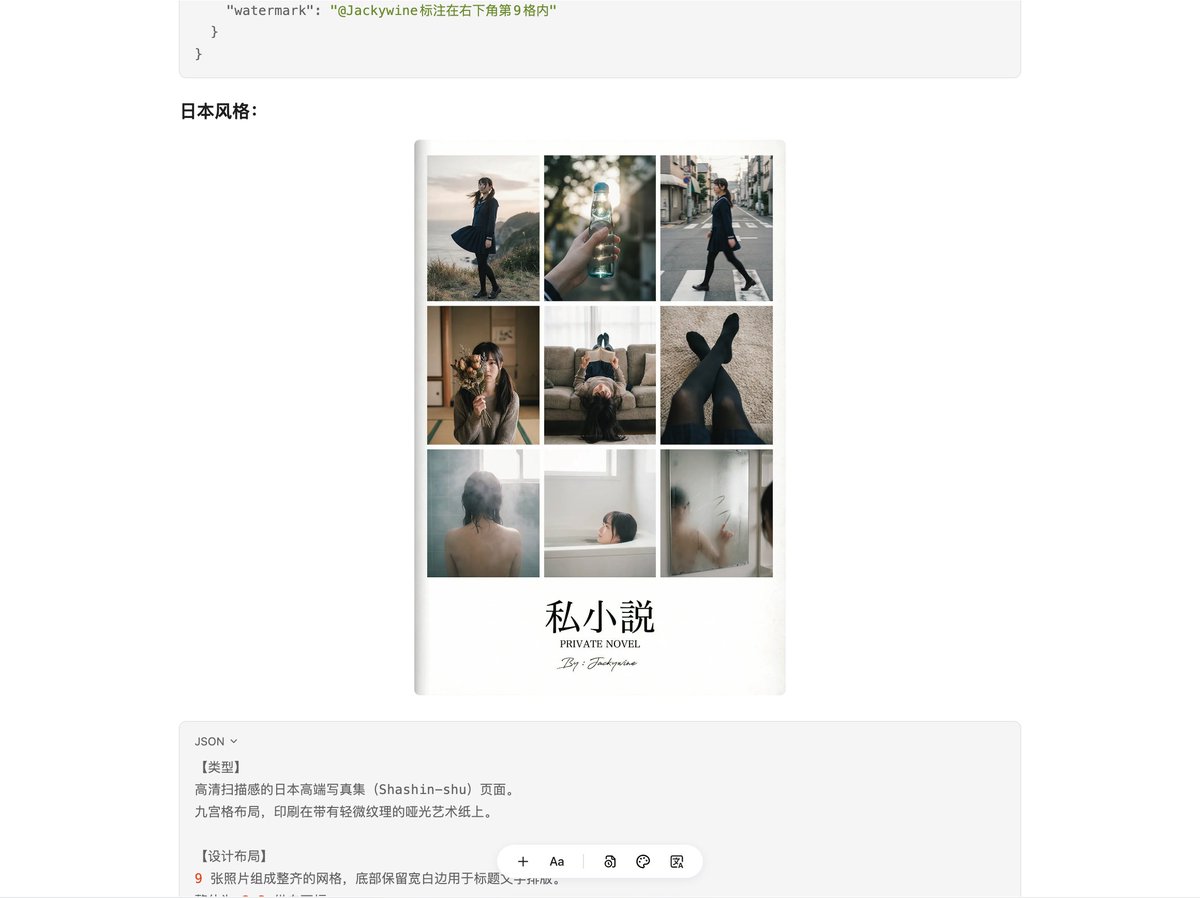
Long Format Prompt Example: High Detail Photo Grid Template
A Chinese prompt example specifies a photo grid layout for a high-end Japanese photo collection (Shashin-shu), detailing the format (9 photos, wide white border at the bottom for the title), aspect ratio (2:3 vertical), and strictly defining the subject as an adult female (approximately 150cm, slender) dressed in a Japanese school-style uniform with high twin tails, black tights, ultra-short skirts, and loafers. The third row is designed with a 'private space/moist/steam' theme, emphasizing artistic expression without sexual implications; it also specifies film tone, paper texture, camera focal length, and negative prompts to avoid minors or sexual connotations.
Community Observation: Attempts to Influence AI Prompt Results Using PUA Techniques
A post pointed out the emergence of phenomena on Reddit where users attempt to influence AI prompt results using strategies akin to PUA (Pick-Up Artist) techniques. It comments on the presence of ambiguous or potentially manipulative prompts, indicating that the actual effectiveness and purpose of prompts are difficult to determine. This post primarily reflects user observations and concerns regarding the application of prompts within the community.
Prompt Example Requiring Deep Reasoning and Strict Output Format
One prompt requests a thorough, first-principle-based deep reasoning analysis of Ayumi Hamasaki's 'empty venue performance' and related responses, specifying: to abandon habitual rhetoric, aim for conclusions based on human nature and objective operations, utilize maximum computational power and token output, adhere to MECE principles, construct causal diagrams and system dynamics models if necessary, focus on English materials for research but ultimately output in Simplified Chinese, and include a detailed analysis, understanding verification, and at least three verification questions with answers. This prompt also stipulates output format and strict review requirements.
Prompt Design Incorporating Detailed Positive and Negative Instructions
The example prompt provides detailed positive descriptions (composition, lighting, clothing, narrative structure, camera parameters, film tone, etc.) alongside negative prompts (excluding minors, avoiding the term 'schoolgirl', prohibiting sexual implications and lingerie focus, avoiding excessive sharpening and CG texture, etc.), reflecting a balanced approach to detail and constraints in prompt engineering.
Diverse Uses and High Standardization Trends in Prompt Engineering within the Community
From the examples and discussions, it is evident that on one hand, users are crafting highly structured long prompts with legal and ethical exclusions; on the other hand, there are attempts within the community to manipulate or test AI using language strategies, along with clear demands for deep reasoning and strict output formats, indicating that prompt engineering encompasses multiple uses from creation to analysis, and from aesthetics to verification.
Prompt Requests Can Include Meta-Instructions to Constrain Generation Processes and Verify Outputs
The example includes a prompt that explicitly requires 'utilizing the maximum available computational power and maximum token generation length', adhering to MECE, submitting 'understanding verification' along with verification questions and answers, demonstrating that prompts can be used to impose strict regulations and self-verification requirements on the generation process and results.