
Infrastructure & Energy: AI Data Center Power, On‑site Generation and Costs
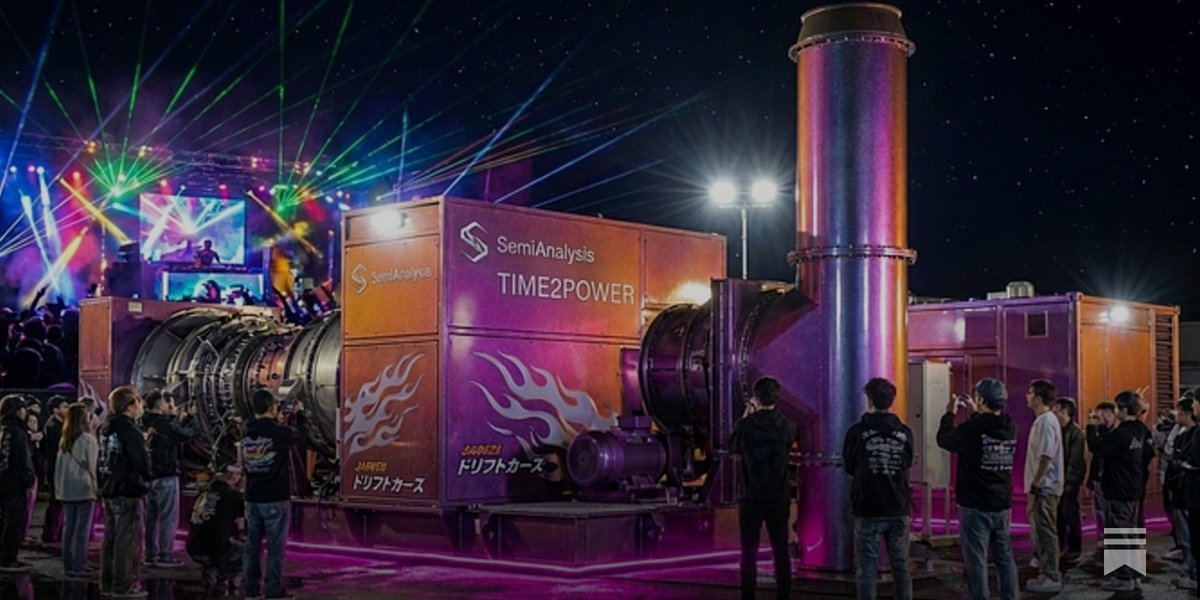
AI data center growth prompted on-site power solutions, with firms renting gas turbines, batteries and alternative generation to bypass slow grid access.
Key insights
Rapid on-site generation used to bypass grid delays
Several AI labs and companies (xAI, OpenAI/Oracle partnerships, Meta projects) deployed or ordered on-site generation—rental gas turbine trucks, industrial gas turbines and containerized engines—to start compute months or years earlier than grid interconnect timelines, which can take three to five years. xAI deployed >500MW of on-site generation in Memphis; OpenAI/Oracle ordered 2.3GW of self-generation capacity per reporting.
Self-generation prioritizes speed over unit energy cost
Companies accepted higher per-kWh costs for faster time-to-market, arguing that months of earlier operation yield large revenue advantages (reports citing $1–1.2B per GW-year revenue). Firms view speed as a strategic moat where early availability yields disproportionate economic returns.
Multiple generation technologies used with redundancy and storage
Projects used aircraft-derived gas turbines (fast start), industrial turbines, reciprocating engines, Bloom fuel cells, and heavy combined-cycle turbines. Operators pair on-site generation with battery systems (Megapack) and synchronous devices to handle transient loads and grid-like reliability. Some projects overprovision generation by 50–64% to meet uptime targets.
Supply-chain limits and permit hurdles constrain solutions
Turbine manufacturer lead times extend to 2028–2029 due to past demand collapses and supplier capacity limits. Environmental permits and air emissions approvals remain gating factors that can delay projects; firms sometimes apply across jurisdictions to accelerate approvals.
New entrants and cross-sector suppliers responded to demand
Companies like Boom Supersonic expanded into ground gas-turbine supply (Superpower) and ProEnergy repurposed retired aviation engines; Wärtsilä and others secured contracts for containerized engines, reflecting cross-industry responses to data-center demand.
Electrical infrastructure now a strategic constraint for AI deployment
Reports characterized power access as the primary bottleneck for rapid AI cluster expansion; the industry trend toward vertically integrating energy procurement and generation was described as analogous to past vertical moves (e.g., ISPs building fiber).