
Multi-card 'Information Card' Prompt (shao__meng)
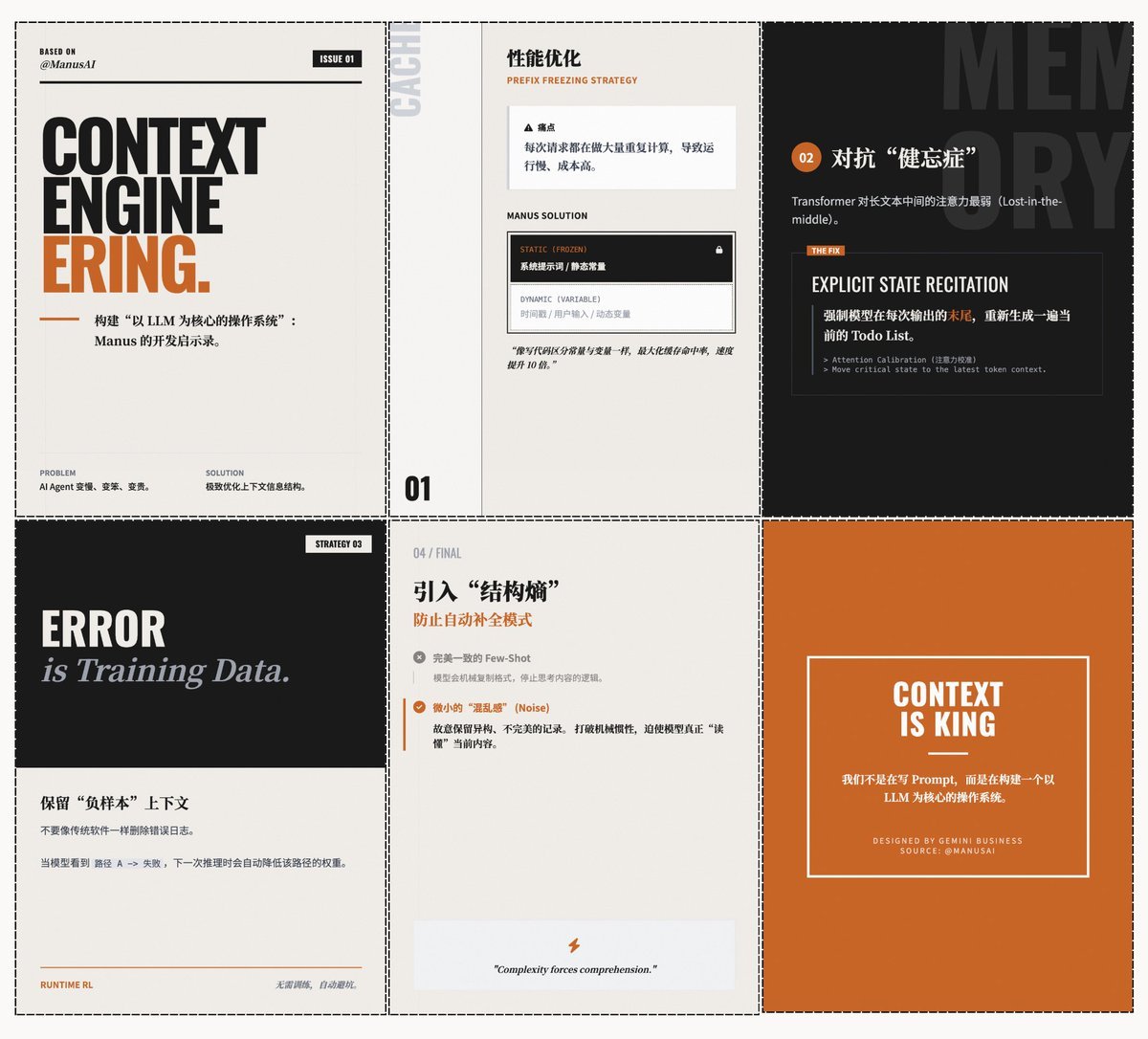
A multi-card "information card" prompt and design system was released to convert text into magazine-style HTML5 poster sets. - Role: user set as "Senior Editorial Visual Designer" for transformation task. - Core style: Modern Editorial + Swiss Style, order and high-contrast typography. - Fixed card size: width 600px, height 800px (3:4 ratio). - Color scheme: paper bg #f2efe9, text #1a1a1a, accent #d95e00 (adjustable). - Visual rhythm: require alternating card brightness patterns to avoid monotony. - Fonts: include Google Fonts CDN for Noto Serif SC, Noto Sans SC, Oswald as specified. - Texture: global SVG feTurbulence noise opacity 0.05–0.08 and multiply blend; deep unified shadow on cards. - Pagination: analyze content to auto-select 3–6 cards typically; Card 1 cover, Cards 2–N-1 content (one idea per card), include one dark-mode card for core data, Card N outro with CTA. - Layout rules: lists as 01/02/03; use image-text mix and leave whitespace on outro. - Output requirements: output single HTML file with CSS/JS, use Tailwind CSS + FontAwesome CDN, flex-wrap horizontal arrangement, set card CSS flex-shrink:0. - Strict: no explanatory text outside the generated HTML code. - Posts indicate prompt is shared for Xiaohongshu/WeChat article formats and the author’s accounts will distribute updates.
Key insights
Comprehensive design system provided for multi-card editorial posters
The prompt prescribes a full design system for producing magazine-style, multi-card HTML5 information posters: Modern Editorial + Swiss Style aesthetics, fixed 600x800px card size, specific color palette (#f2efe9 background, #1a1a1a text, #d95e00 accent), and a visual rhythm requirement. It mandates Google Fonts (Noto Serif SC, Noto Sans SC, Oswald), global SVG noise overlay, and unified deep shadows for card texture. These specifications aim to standardize output aesthetics for platforms like Xiaohongshu and WeChat public accounts.
Pagination and content-splitting rules enforce one idea per card
The prompt defines pagination logic: automatically decide 3–6 cards from input length; Card 1 as cover, Cards 2–N-1 each host a single core idea or chapter (lists use numbered layout), require one dark-mode card for key data or quotes, and Card N as an outro with CTA and whitespace. The goal is readable, non-crowded card sets aligned with article chaptering.
Output constraints require a single HTML file using Tailwind and FontAwesome
Output must be a single HTML file including all CSS/JS, using Tailwind CSS and FontAwesome from CDN. Layout should arrange cards horizontally with flex-wrap and set card CSS to flex-shrink: 0 to prevent deformation. The prompt instructs to include the specified Google Fonts in the head and forbids any explanatory text outside the HTML code.
Author will continue iterating and sharing prompt updates
The author indicated the multi-card approach was inspired by community feedback, posted an updated prompt version and plans further refinements and distribution via a public account that will continue sharing information-card prompts and AI content templates.