
Nano Banana Pro Image Model: Case Studies and Prompt Testing
Nano Banana Pro has demonstrated strong style transfer, image consistency, and interactive features through practical testing, with the community compiling over 45 case studies and a complete collection of prompts.
Key insights
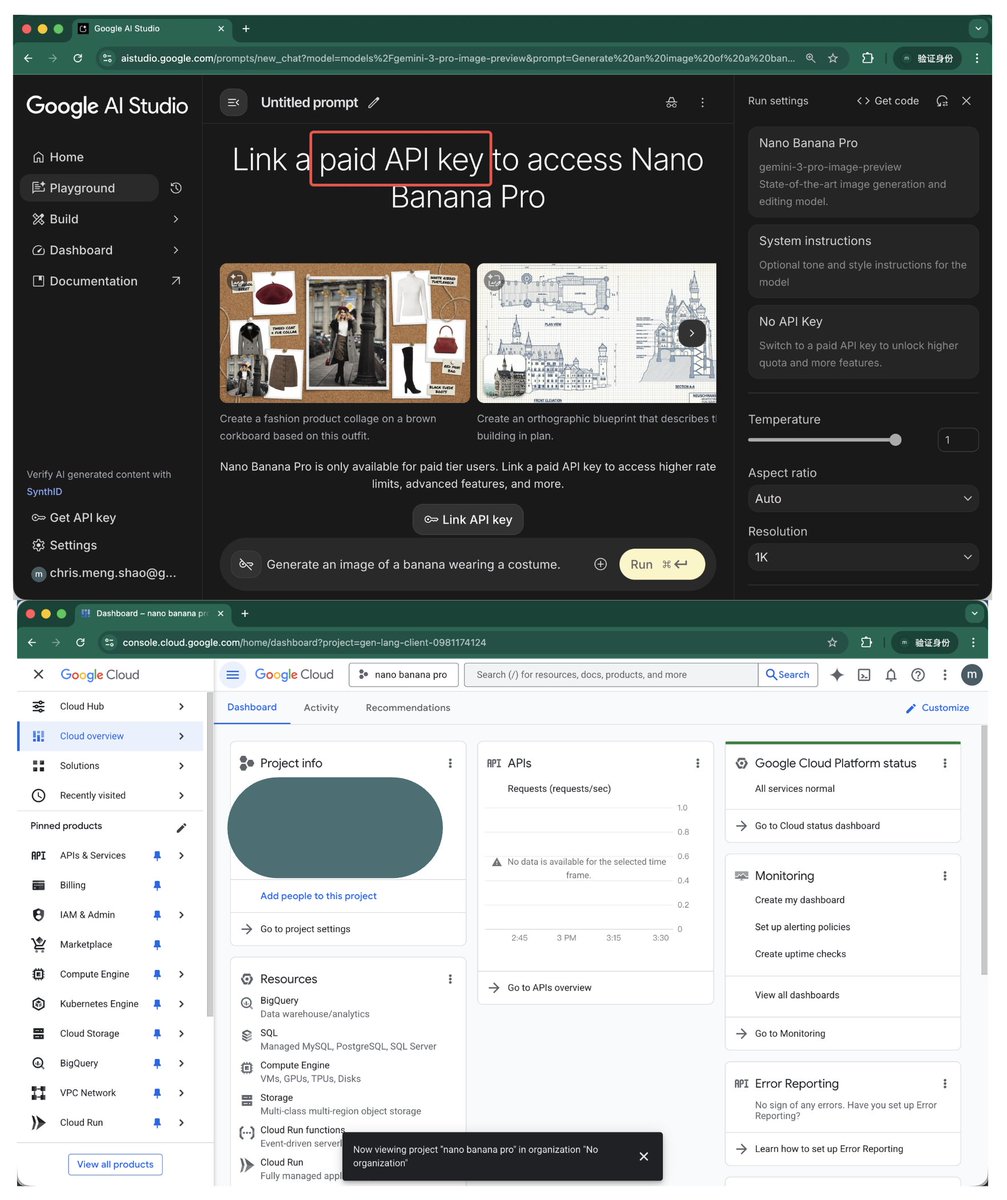
Platform Access Requires Paid API Key and Involves Cloud Console Operations
Reports indicate that Google AI Studio supports Nano Banana Pro, but requires a paid API Key; some users with default free accounts are unable to use it and need to configure payment through the Google Cloud Console, affecting user experience due to the complexity of the cloud console.
Open Source Case Collection Demonstrates High-Quality Outputs Across Multiple Categories
The community has organized 'Awesome Nano-Banana-Pro Images' on GitHub, featuring over 45 high-quality examples covering categories such as gaming, anime, surrealism, posters, and illustrations, along with complete prompts and an online viewing page for design reference.
Strong Style Extraction and Generalization Capabilities for Design Systems and UI Drafts
Practical tests show that the model can extract styles from classic industrial design samples and generate a complete design system and backend pages based on this; it can produce different categories of UI drafts from a single style sample, showcasing strong style transfer capabilities.
Significant Impact of Prompt Precision, with Large Output Variations from Semantically Similar Prompts
User tests found that prompts with no substantial semantic differences can produce non-interchangeable outputs, raising questions about prompt precision and documenting multiple comparative examples, showing the model's sensitivity to subtle prompt differences.
Multimodal and Consistency Features Suitable for Education and Real Material Generation
The model supports consistency processing of multiple images and interactive image features, capable of generating collage-style travelogues while maintaining consistency in character and product details and adding design elements (such as Polaroid borders and handwritten annotations), making it suitable for teaching and material production.
Source posts
- Original post by @shao__meng on X
- Original post by @GitHub_Daily on X
- Original post by @op7418 on X
- Original post by @howie_serious on X
- Original post by @howie_serious on X
- Original post by @op7418 on X
- Original post by @op7418 on X
- Original post by @op7418 on X
- Original post by @dotey on X
- Original post by @op7418 on X
- Original post by @op7418 on X
- Original post by @op7418 on X
- Original post by @op7418 on X
- Original post by @op7418 on X