
Open‑source Model Landscape: DeepSeek, Emu3.5 and the 'Glass‑Slipper' Effect
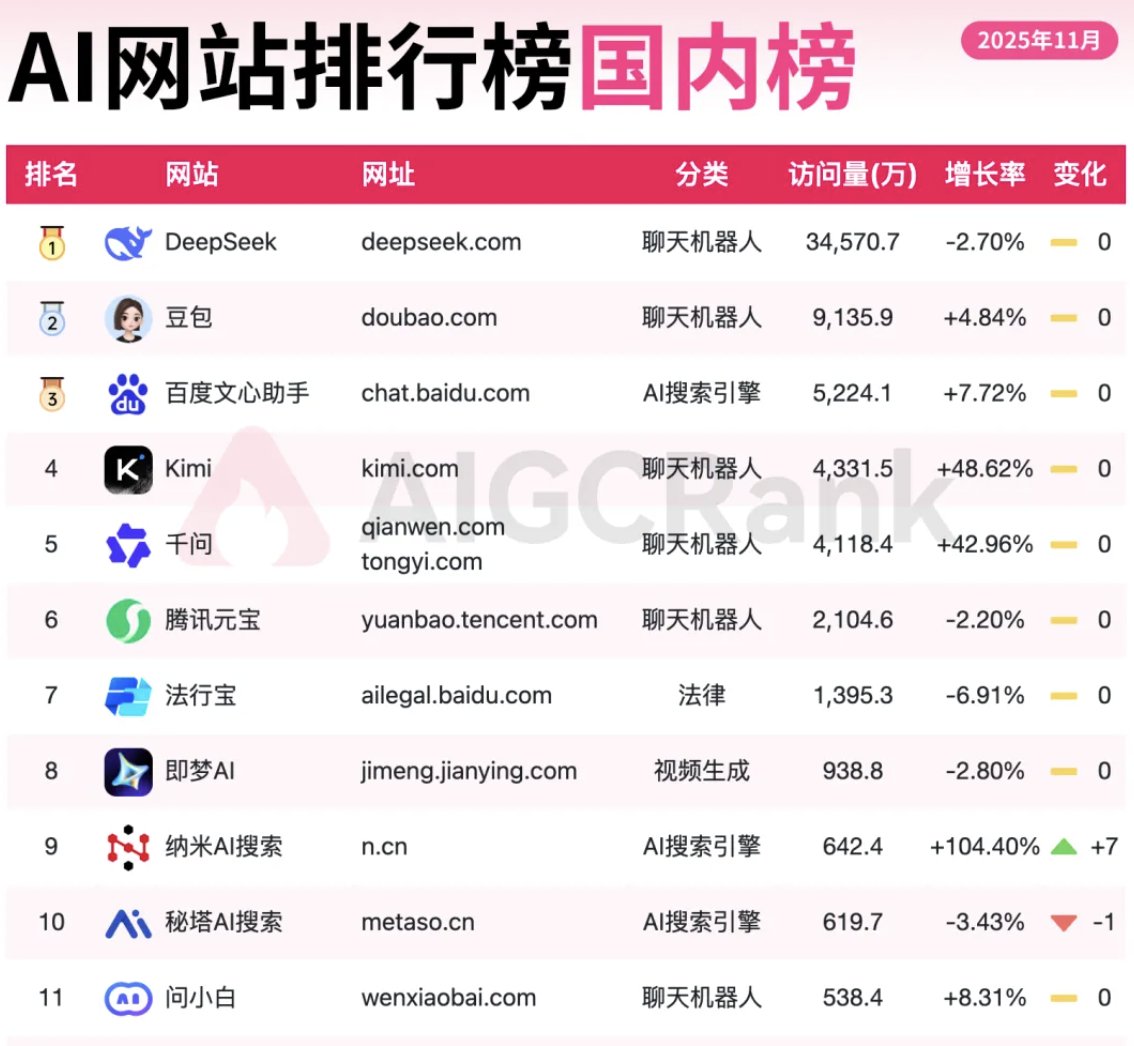
Open-source models saw both technical innovations and a user 'glass‑slipper' retention effect favoring first-to-fit models.
Key insights
Glass‑Slipper effect explains long-term retention for initial-fitting models
OpenRouter analysis described a 'Cinderella Glass Slipper Effect' where users that first find a model that perfectly fits a specific high-value need form durable attachments. The analysis found early adopters stick with models that match task style, latency and response patterns; later superior models do not necessarily displace these 'foundational cohorts.'
Emu3.5 targets next‑frame world modeling across multimodal inputs
Beijing Academy’s Emu3.5 unifies text, image and video into a single token stream and frames training as next‑state prediction (NSP) to predict 'the next world state' rather than modality-specific outputs. Emu3.5 emphasizes spatial relations and temporal prediction for multi‑modal continuity.
DeepSeek V3.2 reports sparse-attention and expert‑distilled training gains
DeepSeek-V3.2 technical notes describe a DSA sparse-attention mechanism to reduce complexity on long inputs, and a training pipeline that distills multiple expert specialist models using large-scale reinforcement learning and synthetic environment tasks to improve general reasoning and agent behaviors. Benchmarks claimed parity or advantage versus closed‑source models on several reasoning and math tasks.
Open-source model ecosystem now multi‑pole with experiential lock‑in
Open-source adoption patterns show multi-vendor competition (DeepSeek, Meta, Mistral, Qwen) and user loyalty driven by experience-fit rather than raw benchmark superiority. Experience-fit includes persona, latency, tool compatibility and historical context.