
Open-Source Models & Ecosystem Dynamics
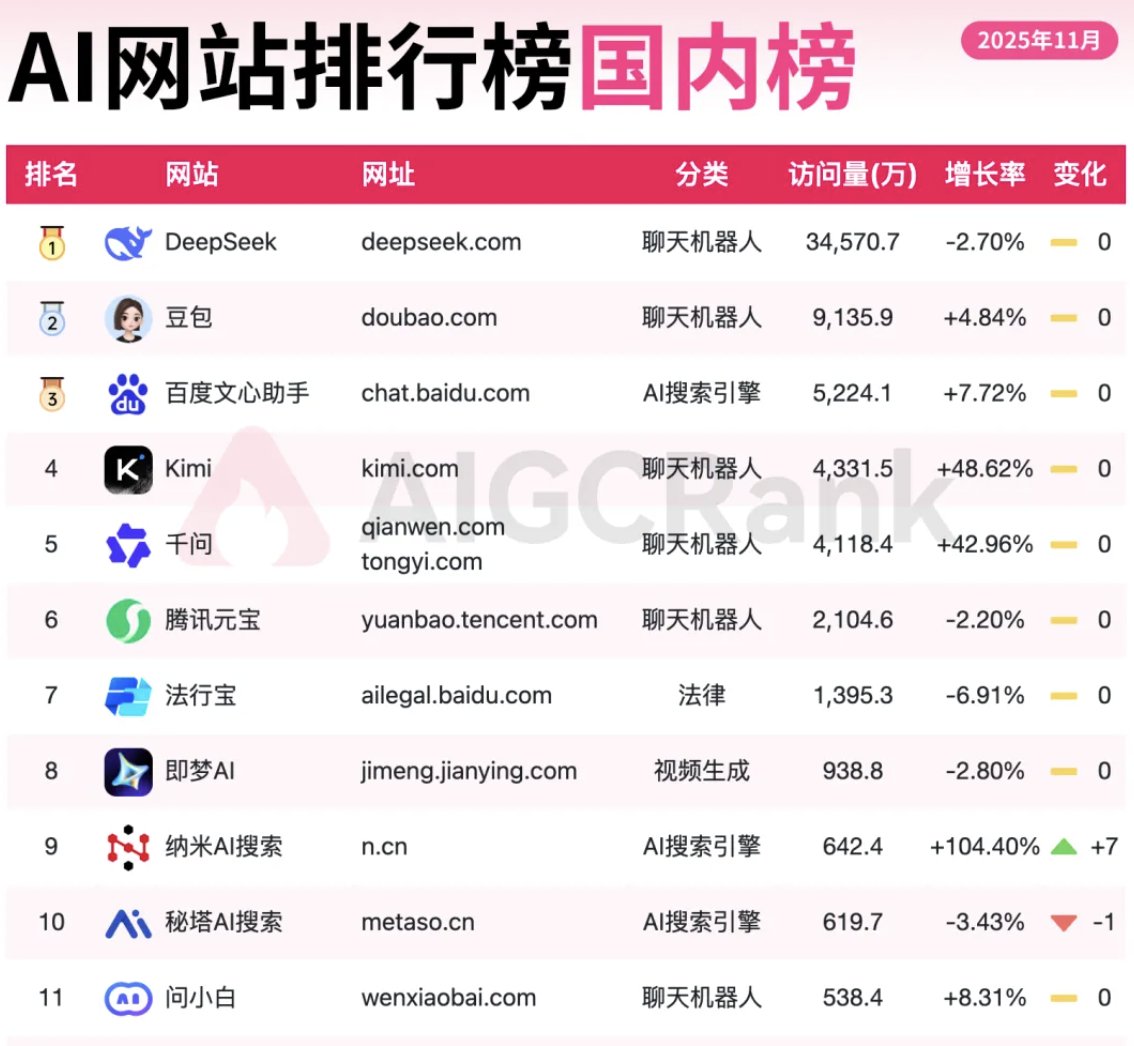
Multiple reports show open-source model ecosystems matured in 2025. DeepSeek achieved top global traffic and user stickiness due to early problem fit, described as a 'Cinderella Glass Slipper' lock-in effect (17112). a16z/OpenRouter State of AI 2025 analyzed 100T token real calls: agentic usage rose, middle‑sized models (15B–70B) became favored, and China-origin open models gained ~30% share (16856). DeepSeek‑V3.2 claims sparse-attention DSA, expert distillation and synthetic agent training to reach parity with closed models at lower cost (17277). Qwen3-Next 80B models with FP8 were released for faster inference (1832). The data indicates multi‑polar open-source competition, mid-size model preference and performance-cost tradeoffs.
Key insights
Early problem-fit produces durable open-model user lock-in
OpenRouter analysis and user-behavior observations describe a 'Cinderella Glass Slipper' effect: when a model first solves a critical high-value pain point for a cohort, that cohort forms durable loyalty even if stronger models appear later. The effect emphasizes experience fit, persona and integration over raw benchmark superiority.
Open-source ecosystem becomes multi-polar with China-origin models gaining share
a16z/OpenRouter data shows open-source models grew rapidly in 2025, with Chinese models rising from ~2% to ~30% share of open-source usage. The ecosystem moved toward many competitive mid-size models (15B–70B) that balance cost, latency and capability, challenging single-model dominance.
DeepSeek v3.2 claims architecture and training efficiencies that approach closed-model parity
DeepSeek‑V3.2 paper describes a sparse-attention DSA mechanism to focus on salient tokens, a training regimen combining domain experts with knowledge distillation and large-scale RL in synthetic agent environments. The report claims parity with top closed models for reasoning and agent tasks while reducing compute cost.
Qwen3 Next releases with FP8 inference optimizations
Alibaba’s Qwen3-Next-80B variants with FP8 precision were released with compatibility for Transformers, vLLM and SGLang, enabling faster and cheaper inference suitable for deployment in production systems.
Agentic usage and reasoning workloads drive model selection and architecture choices
OpenRouter/a16z analysis reports that agentic queries and multi-step reasoning grew to >50% of usage, and that programming workloads drive high token consumption. This trend favored mid-size, efficient architectures that support tool-calling and long-context handling.