
OpenAI Claims Solving Navier-Stokes Millennium Problem with AI Agents, Controversy with Buckmaster
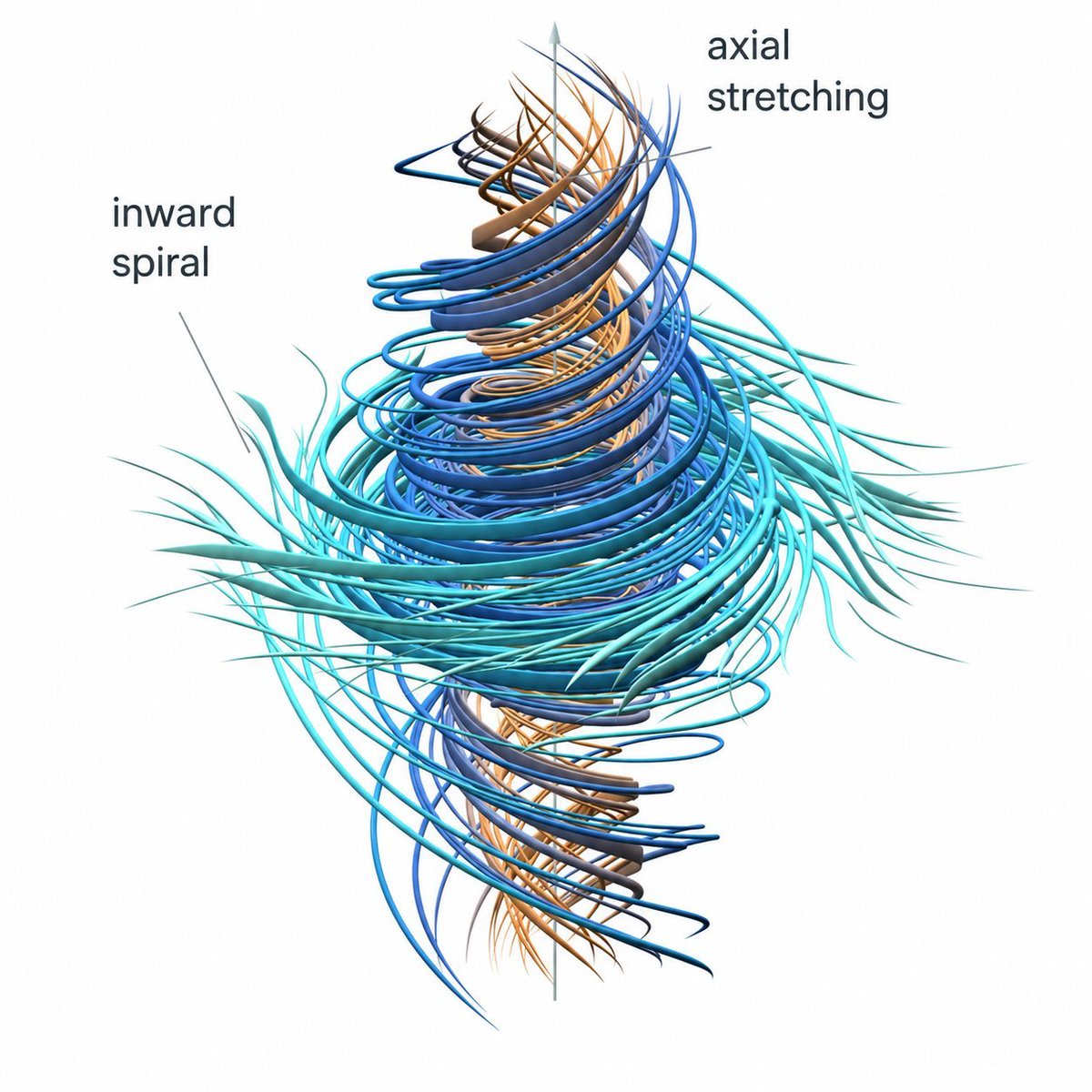
OpenAI announced that its internal AI model solved the Navier-Stokes millennium problem using 10,000 coordinated agents. The solution includes a proof of finite-time blowup for 3D incompressible Navier-Stokes and a stronger result for Euler equations without external forcing. Both proofs are accompanied by Lean formalization. The announcement came hours after mathematician Tristan Buckmaster published a statement detailing his own results and alleging that OpenAI, after learning of his work, tried to co-opt the discovery and demanded removal of his co-author due to his employment at Anthropic. Buckmaster and co-author Levent Alpöge had used LLMs to achieve blowup for forced Euler and related equations, but not Navier-Stokes. OpenAI claims the approaches are different and that they acted with integrity. The controversy involves accusations of plagiarism, data use, and pressure tactics. The mathematical community awaits independent verification of OpenAI's proofs.
Key insights
OpenAI's Claim and Methodology
OpenAI stated its unreleased internal model (more powerful than GPT-6 Astra) generated a proof for the Navier-Stokes millennium problem. The proof shows that 3D incompressible fluids can develop singularities from smooth initial conditions under smooth forcing, with bounded energy. A system of ~10,000 AI agents worked in groups, sending 2.7 million messages and consuming ~130 billion output tokens. The solution arrived ~88 hours after launch, followed by 17 hours of Lean formalization by GPT-6 Astra. Additionally, ~100 agents solved the Euler equation without external forcing in ~50 hours. OpenAI said it attempted the problem after hearing rumors that Anthropic's models had solved a millennium problem.
Buckmaster's Results and Counter-Allegations
Tristan Buckmaster and Levent Alpöge announced proofs of finite-time blowup for forced porous media, Boussinesq, and 3D Euler equations using LLMs (Claude, Codex, etc.). Their results were verified in Lean on August 22. They had not yet solved Navier-Stokes. Buckmaster alleged that OpenAI, after learning of their progress, pressured them to co-release and demanded the removal of Alpöge from authorship because he works at Anthropic. Buckmaster refused and was told he could 'destroy his career'. OpenAI denied the accusations, saying they wanted to collaborate and offered to let Buckmaster go first. Buckmaster stated he has not seen OpenAI's proof and does not accuse them of data misuse, but he detailed the timeline of interactions.
Role of AI in Mathematical Research
Both teams relied heavily on large language models. Buckmaster described the first AI-generated proof as 'the most terrifying thing I have ever read', requiring weeks of human rewriting. He compared the moment to Deep Blue vs. Kasparov, highlighting that one mathematician with an LLM can accomplish in a month what previously took years. OpenAI's massive agent swarm autonomously generated proofs and formalizations. Terence Tao acknowledged the achievements but preferred deeper mathematical insight over brute-force AI methods.
Controversy Over Credit and Ethics
The dispute centers on priority and academic attribution. Buckmaster claimed that OpenAI initiated their project after his work leaked internally, using the same niche technical approach. OpenAI denied accessing user data but admitted the possibility of de-identified data improving their model. Bubeck called Buckmaster's allegations 'false and inflammatory'. The mathematics community noted that OpenAI's announcement ignored prior work by Córdoba and Martínez-Zoroa. Clay Institute rules require journal publication and two years of community review for the prize, which OpenAI forgoes.
Verification Status and Community Reaction
OpenAI published Lean code on GitHub, but independent mathematicians have not yet verified it. Lean formalization, if correct, guarantees logical validity, but manual inspection is still needed. Terence Tao called Buckmaster's work 'a remarkable achievement' and noted no fundamental obstacles to extending the methods to Navier-Stokes, but he expressed caution about relying on massive AI compute. He also observed that the authors were forced to release early due to 'external events' (the OpenAI conflict).
Timeline of Events
Buckmaster and Alpöge achieved key results on August 15 and received Lean verification on August 22. Rumors of an Anthropic solution circulated around September 1. OpenAI started its test on September 1, according to Sam Altman. On September 3, Buckmaster contacted OpenAI. OpenAI urged an early meeting, and on September 6, Bubeck informed Buckmaster of their proof. OpenAI's first prompt was issued within the 'past few days' (i.e., after Buckmaster's work became known). Buckmaster rejected OpenAI's proposals, and the public statements were released on September 8.