
OpenAI Feature Release and Developer Guidelines
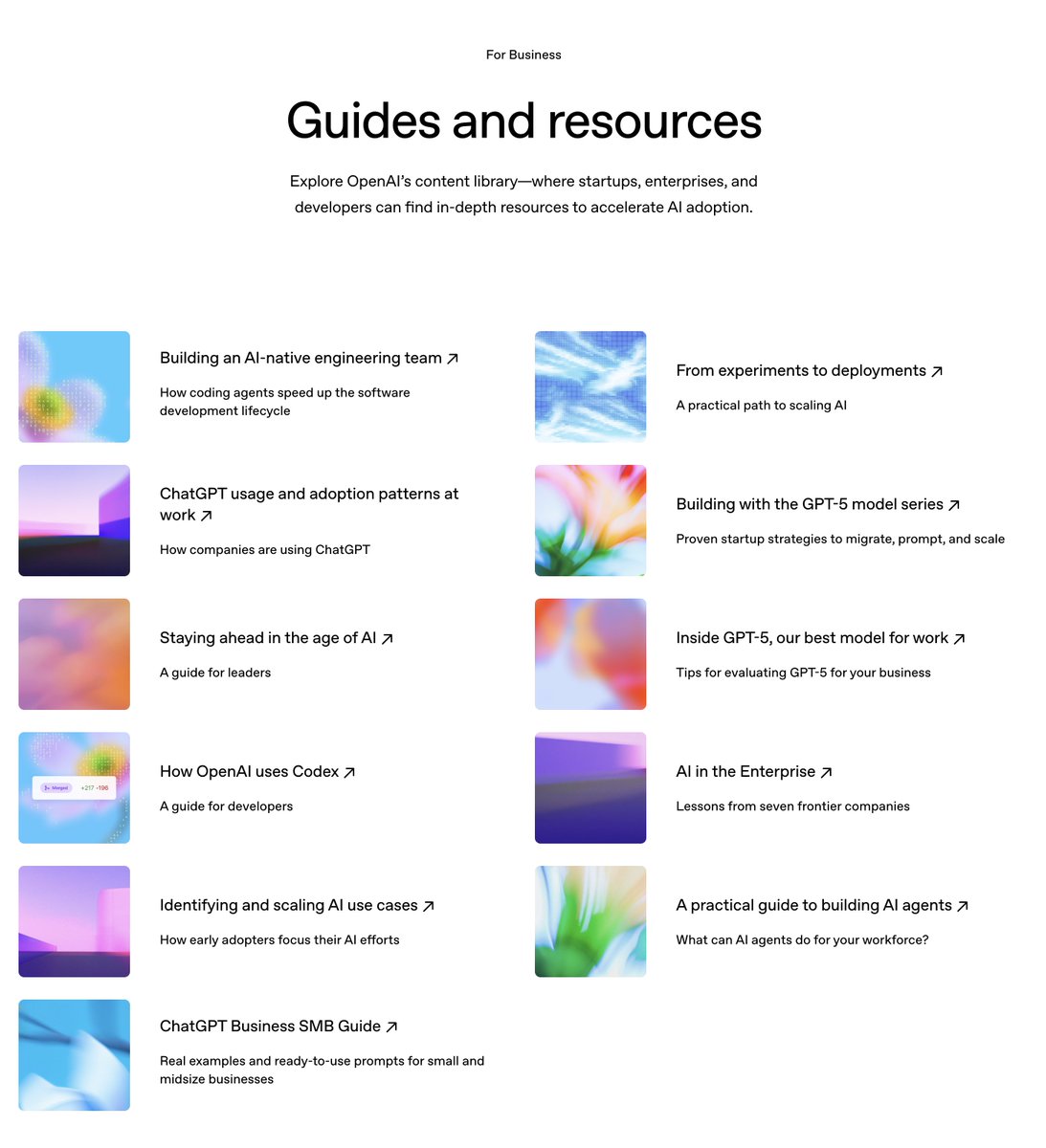
OpenAI updates multiple resources and ChatGPT features: - OpenAI has organized and released 'Guides and Resources' covering 11 topics, including team building, transitioning from experimentation to deployment, adoption of ChatGPT in the workplace, usage guidelines for the GPT-5 model, and agent construction. - ChatGPT introduces a 'Shopping Research' feature, utilizing a specially optimized mini version of the GPT-5 model to enhance the accuracy of shopping tasks through reinforcement learning and enabling extensive internet searches (prices, availability, reviews, specifications, images, etc.). - If memory is enabled, the shopping research will provide personalized recommendations based on the user's historical conversations. - OpenAI offers migration, deployment, and practical guidelines for startups and enterprises, emphasizing 'human + AI' collaboration and ethical oversight.
Key insights
OpenAI Releases 11 Developer and Enterprise Guidelines
OpenAI has compiled guidelines covering 11 topics including team building, transitioning from experimentation to deployment, enterprise adoption of ChatGPT, usage guidelines for GPT-5, agent construction, and practical operations for small and medium enterprises. These guidelines provide engineering practices, leadership, and adoption advice for organizations of various sizes, emphasizing collaboration between humans and AI and risk management.
ChatGPT Introduces Shopping Research Feature
ChatGPT has launched a shopping research feature, utilizing a mini version of the GPT-5 model optimized for shopping tasks and enhancing relevance through reinforcement learning. This feature includes cross-web searches for prices, availability, user reviews, specifications, and images, ultimately generating personalized shopping guides to assist decision-making.
Memory Integration Enhances Personalized Recommendations
If users enable the memory feature, ChatGPT's shopping research will reference previous conversation history to provide more personalized product recommendations, such as considering preferences discussed earlier or product categories the user has shown interest in.