
Prompt Engineering Tips and Templates
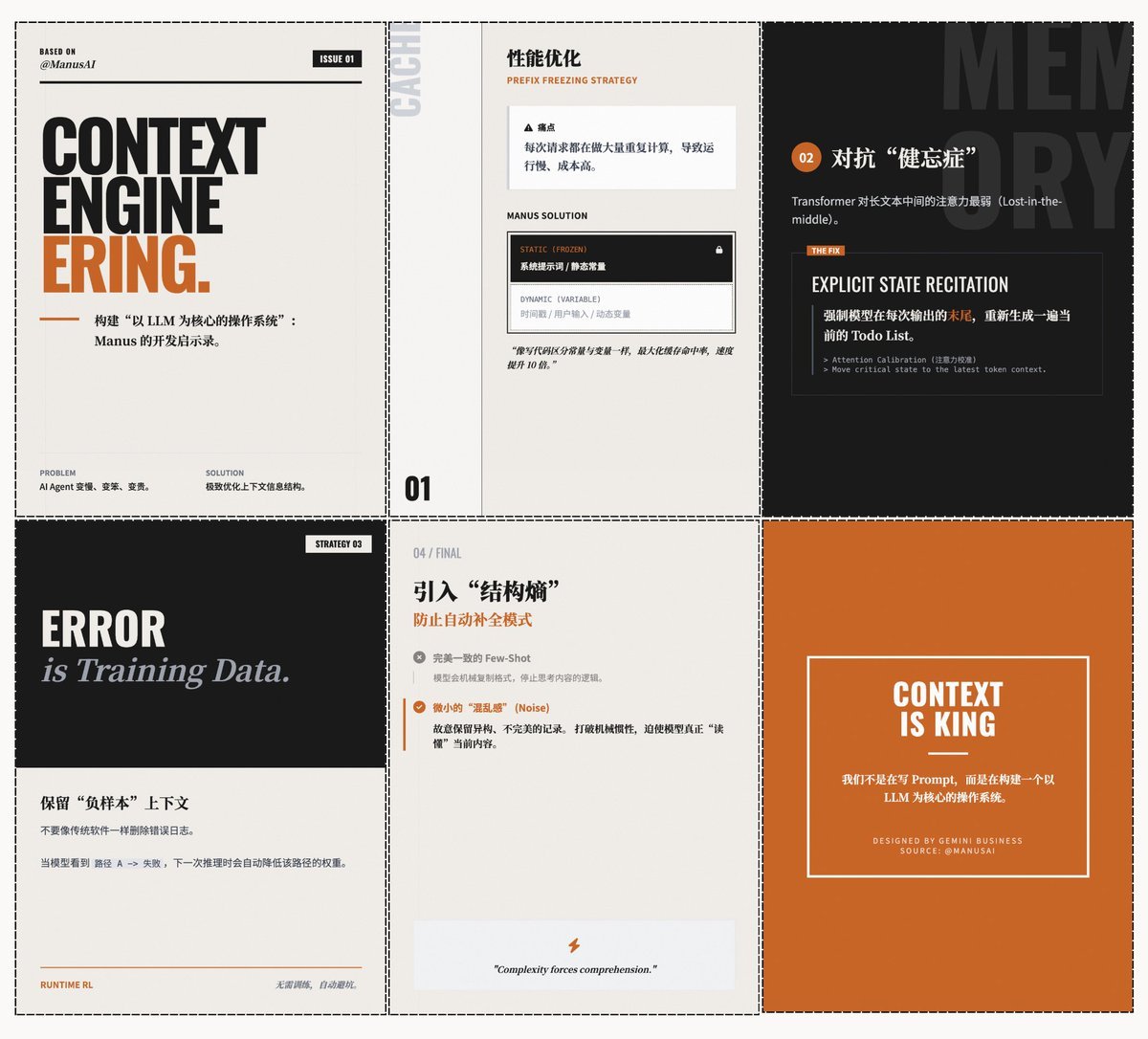
Prompt engineering best practices focus on expert simulation, role framing, compression, and multi‑card content templates.
Key insights
Ask AI to simulate appropriate experts rather than 'you'
Advice recommends avoiding generic 'you' prompts; instead, first ask which real‑world experts or stakeholders would best answer the question and then ask the model to simulate them. This approach leverages LLMs as simulation engines and yields more precise, domain‑aligned responses.
Convert single info cards into multi‑card HTML outputs for social platforms
A detailed prompt template instructs an LLM to act as a 'senior editorial visual designer' and convert input text into multiple magazine‑style HTML5 information cards (3–6), with explicit design system, fonts, SVG noise, pagination logic, and Tailwind + FontAwesome output. The prompt enforces CSS/JS inclusion and no narrative explanation outside the HTML.
Compress and clean complex JSON prompts into shorter variants
A simple utility prompt was shared: clean and compress supplied prompts, removing irrelevant description and returning three compressed versions (<=800, <=500, <=200 words). This tactic is presented as a practical way to simplify overlong JSON prompts.
Role selection and example‑based instruction improve tool use
Recommendations include asking the model to identify the ideal roles to answer a query and using concrete call examples (e.g., JSON samples) instead of long textual parameter descriptions, because models learn better from examples than verbose rules.
Progressive prompt design favors adaptive system prompts
Advice suggests system prompts should be adaptive and include snapshots of the current environment state (e.g., working directory, last test status) rather than static boilerplate, improving agent continuity.
Simple meta‑prompts help find the right respondent persona
A short meta prompt ('help me find the best person to answer this question and present their reply') is recommended to avoid default, bland model personas and obtain specialized viewpoints.