
Real‑time multimodal agent frameworks (TEN, Skywork)
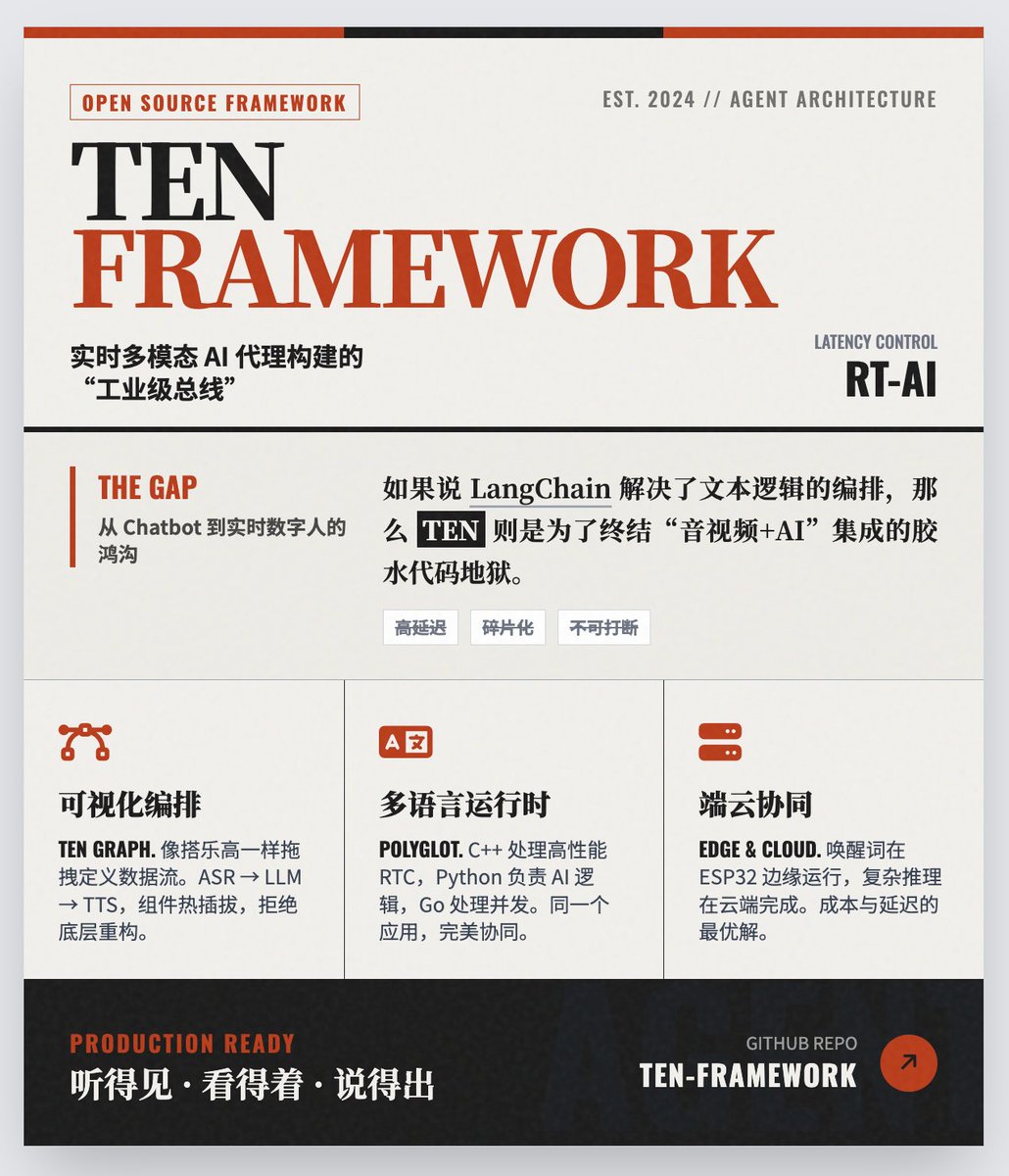
New frameworks and apps target real-time, multimodal agent orchestration and brand voice automation. - TEN Framework: open-source, graph-driven runtime for real-time audio/video + LLM orchestration; visual TEN Designer for drag-and-drop pipelines. - TEN supports polyglot runtime (C++ for RTC, Python for LLM logic, Go for high concurrency) and edge-cloud distribution. - TEN includes on-demand loading, low-latency processing, and a standardized bus for modules and connectors. - Skywork mobile v5.0 adds voice-note transcription, formatting, auto-generated todos and multi-agent export (PPT, social posts, podcast, poster). - Commentary argues brands will adopt persistent digital avatars (voice marketing) and agents will connect customer voice to product and content workflows.
Key insights
TEN Framework enables modular real-time audio/video + LLM pipelines
TEN provides a graph-driven visual designer to compose real-time pipelines (mic -> denoise -> ASR -> LLM -> TTS) and a polyglot runtime that runs high-performance audio paths in C++ while hosting LLM logic in Python. It supports edge-cloud splits for latency and cost optimization and standardizes plugin connectors for models and tools.
Skywork mobile app demonstrates multi-agent, multi-output workflows
Skywork v5.0 mobile adds a voice-note feature that transcribes, formats, extracts action items and can run multiple agents in parallel to export outputs (PPT, social media content, podcast, poster), showcasing practical mobile agent workflows.
Brands will operationalize voice-enabled agents across marketing and product feedback loops
Analysis suggests enterprises will deploy persistent digital brand agents to capture customer voice, generate content, and feed insights back to product and support systems to create coherent cross-department knowledge flows.