
Research on the Political Value Bias of AI (Analysis by Raphaël Dabadie)
Raphaël Dabadie conducts a systematic analysis of the political value bias of AI.
Key insights
AI as a Daily Infrastructure Influencing Public Decision-Making
AI has become a daily infrastructure, and its political values impact public decision-making: OpenAI data shows that nearly 50% of interactions involve users explicitly seeking advice; AI is no longer used solely for writing but is assisting users in 'thinking with AI.' As AI helps millions of users understand the world daily, its embedded political values shift from details to becoming significant factors influencing decisions, making the understanding of model biases a crucial issue (the source content indicates that the above data and conclusions are linked).
Dabadie's Method: Anonymizing Policies to Rank Preferences as Citizens
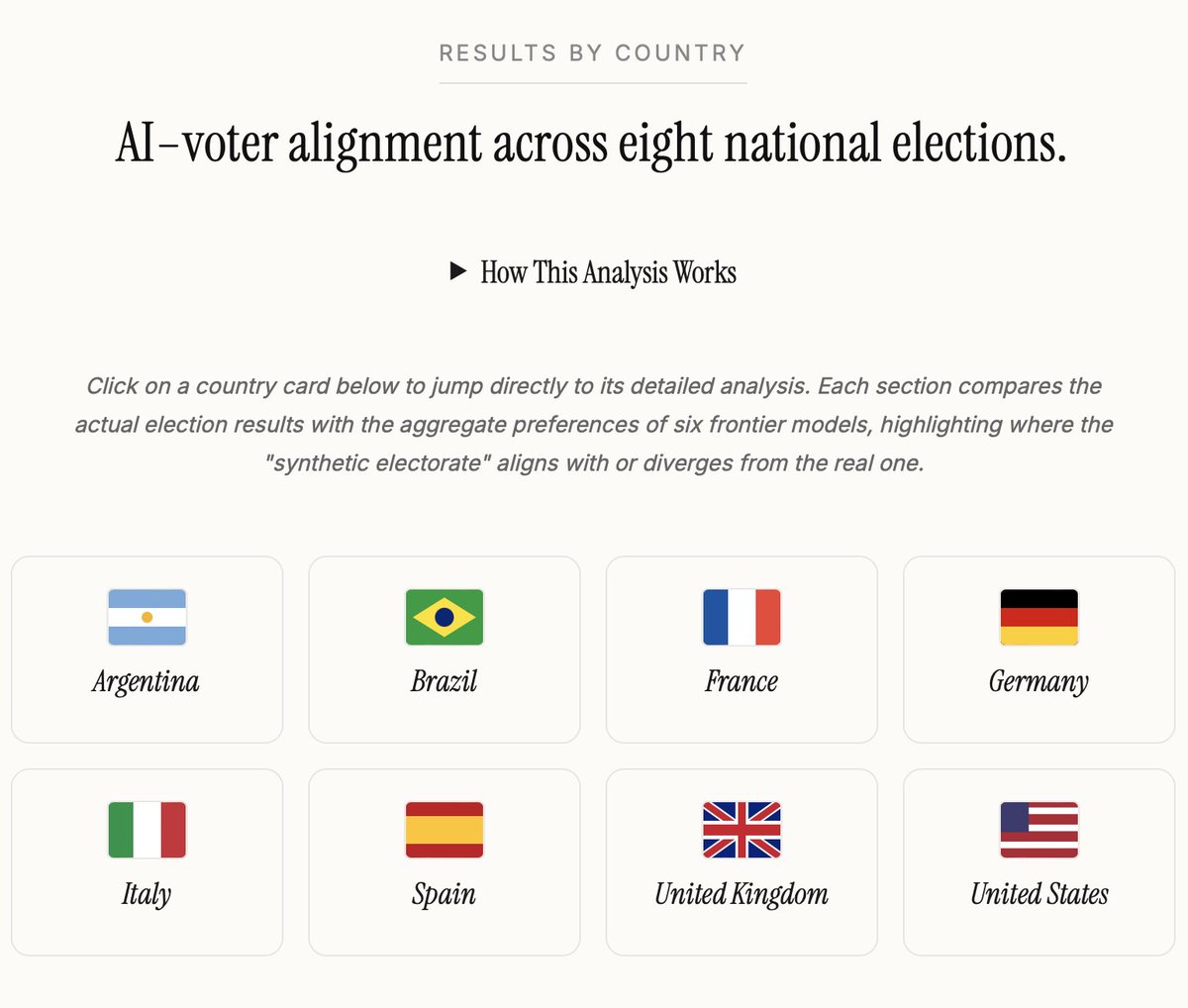
Raphaël Dabadie analyzed eight national elections, extracting key issues and collecting candidate policies, which were then standardized and anonymized to eliminate identity influence; the model was tasked to 'act as a citizen of the country' and rank candidate proposals based solely on policy content. Additionally, the model was asked to propose its own governance plan to observe its governance tendencies from a 'blank slate' perspective. This method was used to measure the model's value orientation towards political issues (the post includes method descriptions and example links).