
Societal impacts: creators, labor, copyright and platform ethics
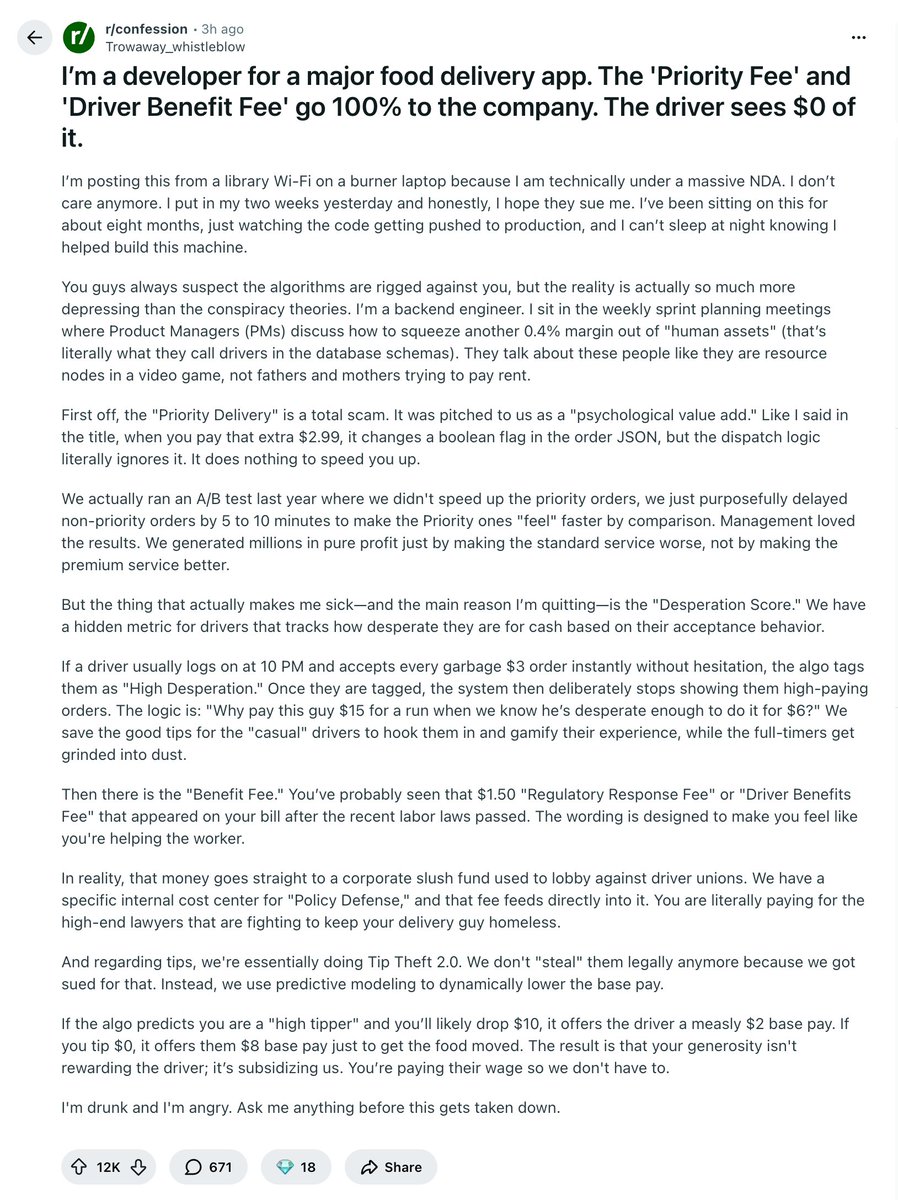
Threads on copyright, platform algorithms and creator economics highlight systemic shifts. - Argument: individual copyright value erodes under limitless generative supply - Platform algorithms externalize extraction; users’ low-cost choices shift burden to labor - Whistleblower: delivery app intern alleges 'priority fees' pocketed and 'desperation score' used to withhold good orders - Internal 'driver welfare' fees allegedly fund anti-union lobbying, not drivers - Examples of low-friction monetization: aggregating free skills, reselling prompts/accounts - Commentary: platforms create moral insulation for mass exploitation - Users and creators face dilution as models replicate styles without compensation
Key insights
Generative AI reduces scarcity and undermines individual copyright economics
Authors argue that unlimited generative output will break traditional scarcity-based copyright incentives: when content can be mass-produced with no marginal cost, individual creators’ works lose monetary value and are absorbed into training and replication without compensation or controllable attribution.
Platform algorithms can obscure exploitation and reprice labor
Commentators describe algorithmic systems that present low prices to consumers while redistributing costs onto workers; algorithmic dispatch and dynamic rules create hidden extraction mechanisms. An internal whistleblower described 'desperation scoring', delayed non-priority orders, and fees routed to corporate 'policy defense' budgets rather than drivers.
Creator monetization shifts toward aggregation and resale of AI skills
Some users outline business models that aggregate free AI skills, repackage them into monetized content or accounts, and sell prompts/workflows or access—practices that trade on low-effort information arbitrage rather than original creative production.