
State of AI 2025, Open Models & OpenRouter Insights
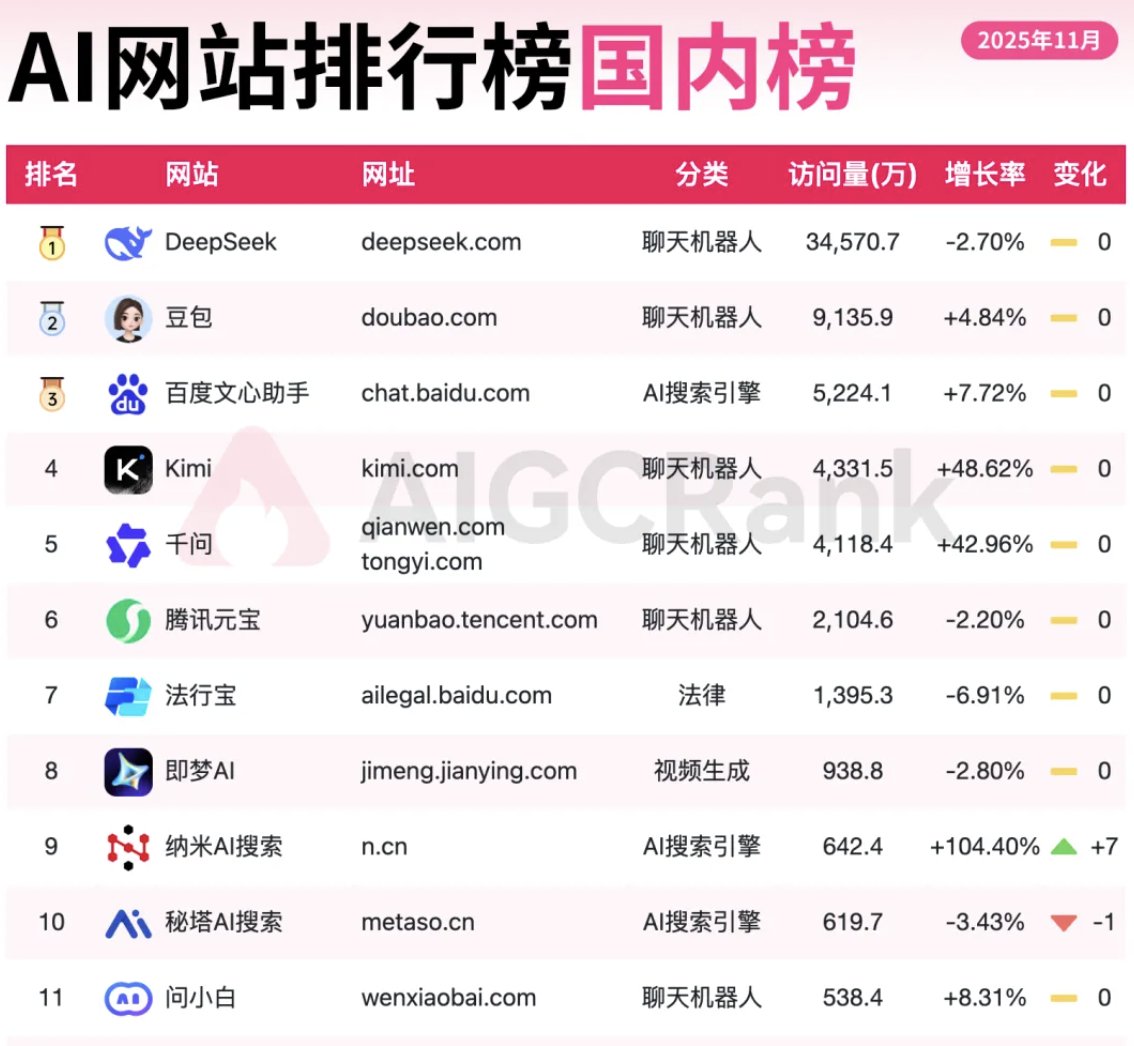
OpenRouter/a16z and other industry reports cataloged 2025 trends: agentic AI, mid-sized open models, regional growth, and the 'glass slipper' lock-in effect. • OpenRouter analyzed 1M+ interactions and found agentic, multi-step reasoning models now exceed 50% of usage. • Open models shifted: 'mid-sized' models (15B–70B) dominate due to balance of cost and capability. • Open-source usage skew: ~50% roleplay/interactive stories, ~20% programming; in open deployments programming token consumption is largest (>20k tokens per session). • Geographic shifts: China/open-source usage rose from ~2% at 2024-end to ~30% mid-2025; Asia usage rose from 13%→31% in one year. • 'Cinderella Glass Slipper Effect' observed: early models that first solve a user pain point lock users in despite later stronger models. • DeepSeek and DeepSeek-V3.2 reported architecture and training strategies (sparse attention, expert distillation, reinforced simulated tasks) reaching parity with closed-source leaders while lowering cost. • Qwen3, Qwen3-Omni, Code World Model, and other open releases expanded modality coverage (omni-modal, audio/video) and FP8 inference support. • OpenRouter data shows push toward mid-sized models for production and increasing use of reasoning/push for tool use.
Key insights
OpenRouter: agentic models and mid-sized open models dominate usage
OpenRouter/a16z data across 1M+ interactions indicates a paradigm shift: agentic, multi-step reasoning models now account for over half of usage. Open-source deployments favor mid-sized models (~15B–70B parameters) as they balance latency, cost and capability. Usage patterns show heavy roleplay in open-source contexts (~50%) and programming as the highest token-consuming vertical in production.
Regional and model-market dynamics: China and Asia rising, 'glass slipper' lock-in
Report findings indicate China’s share of the open-model ecosystem rose dramatically from ~2% at end-2024 to ~30% by mid-2025; Asia overall doubled usage share from 13% to 31%. OpenRouter observed a 'Cinderella Glass Slipper Effect' where early models that first solve specific user pain points generate strong user lock-in, reducing churn even when superior models appear.
DeepSeek and architecture advances close the gap on closed-source SOTA
DeepSeek-V3.2 described a sparse-attention architecture (DSA), expert-model distillation, and reinforcement over synthetic multi-step tasks to achieve top-tier reasoning and agent benchmarks while lowering compute costs. Reports claim parity or advantage on some reasoning benchmarks versus contemporaneous closed-source models.
Open model ecosystem sees modality unification and FP8 gains
Open-source releases expanded modality coverage: Qwen3-Omni and Qwen3-Next large variants provided end-to-end text/image/audio/video models; FP8 inference variants delivered faster, lower-cost inference. Qwen3-VL and Qwen3-Omni releases targeted image/video/audio benchmarks and captioning tasks, with associated open checkpoints and tooling.
Source posts
- Original post by @vista8 on X
- Original post by @imxiaohu on X
- Original post by @shao__meng on X
- Original post by @Yangyixxxx on X
- Original post by @shao__meng on X
- Original post by @Alibaba_Qwen on X
- Original post by @Alibaba_Qwen on X
- Original post by @GeminiApp on X
- Original post by @alexandr_wang on X
- Original post by @Alibaba_Qwen on X